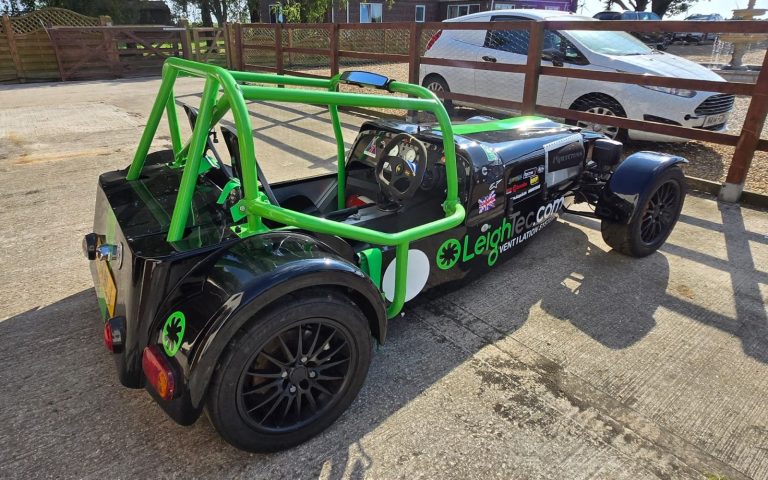

Caterham Seven hillclimb and sprint car (build type)
A Caterham Seven prepared by its owner for UK sprints and hillclimbs. It is a build type, not a factory model. Specifications run from road-registered cars with a roll bar to slick-shod Sports Libre cars with bike or 2.5-litre engines. Buyers must match the car to a class before paying.
History
There is no factory model called a Caterham hillclimb car. The term covers any Caterham Seven an owner has prepared for UK speed events. In sprints and hillclimbs each car runs alone against the clock. Builds range from road-registered Sevens with a roll bar to slick-shod cars with bike engines or 2.5-litre Duratecs 110.
Motorsport UK sorts speed cars into categories. Caterhams usually sit in Specialist Production, meaning at least 20 chassis a year with an engine built in 1,000 or more units 5. In the 2026 HSA Speed Championship, road-going Sevens run in B1 or B2. Modified cars go in D, and the wildest in Sports Libre F1 or F2 3. Sports Libre is the catch-all for closed-wheel cars that fit no other category 6. The Caterham and Lotus Seven Club also runs its own speed championship. In 2025 it had 14 rounds and seven classes, with the best seven scores counting 2. Classes 1 to 5 are road-going and need a V5 and MOT. Classes 6 and 7 are modified, and class 7 takes cars that fit nowhere else 1.
Two documented builds show the range. SBD Motorsport's 2.0 Vauxhall XE car was built in winter 1998/99 as a road and trackday car. It took the XE engine in 2001 after its Ford BDA failed, and became a full race car in winter 2002/03. It won HSA modified production class titles in 2002, 2003 and 2004 7. Andy Griffith's 1400cc Hayabusa-engined Seven won its class at every listed round of the 2008 and 2009 British Hill Climb Championship. It set class records at Gurston Down, Harewood, Shelsley Walsh and Prescott 8.
Cars change hands mainly through the HSA classifieds and Race Cars Direct. Many adverts pitch the same car for hillclimbs, sprints and circuit series such as 750MC Sports Specials 911. The seller's description is often the only record of the spec, so the paperwork matters more than the badge 111.
Palmarès
There is no single results record, because every car is a different build. Documented examples include SBD Motorsport's 2.0 XE car, HSA modified production class champion in 2002, 2003 and 2004 7. Andy Griffith's 1400cc Hayabusa car won its class at every listed British Hill Climb Championship round in 2008 and 2009 8. At Aintree, Caterhams hold all seven Lotus 7 Club class records listed in June 2025 12.
What to check before you buy
Petty strut and roll cage certification stickers: Scrutineers may check the petty strut sticker, and a full cage needs its own verification sticker. Cars over 2000cc need a full cage in the club series. Which class the car actually fits: Power caps (130, 155, 220 bhp), tyre lists and gearbox type decide the class. A sequential box rules out club class 4. Road documents or log book: Club classes 1-4 need V5, MOT and road tax. A car sold with no V5 may only fit class 7. Engine builder, rebuild date and dyno sheet: Sellers quote meetings since rebuild and dyno figures; ask for invoices from the named builder rather than trusting a power claim. Harness and fire extinguisher dates: Adverts state harness validity years and whether the fire system is in date; expired items must be replaced before scrutineering. Cooling system on K-series cars: Owners link K-series gasket failures to cooling and heat soak, so check coolant history and temperature control. Reverse mechanism on bike-engined cars: A reverse is compulsory; confirm the reverse box or starter reverse works and has a breather fitted. Wheel and tyre sets included: Hillclimb cars often come with separate dry and wet sets; replacing them adds to the purchase cost.
Versions and evolutions
| Version | Years | What changed | How to identify |
|---|---|---|---|
| Road-going entry build (club classes 1-3, HSA B1/B2) | Any | Standard engine up to 1600cc and 130 bhp (class 1) or 1800cc and 155 bhp (classes 2-3). Roll bar, petty strut, road tyres from List 1A or 1B. 1 | Road registered with V5, MOT and tax; road tyres; 4, 5 or 6-speed manual; typical models Seven 160, Academy, Roadsport, 310R. |
| Road-going high-power build (club classes 4-5) | Any | Class 4 allows any car-derived engine up to 220 bhp with a non-sequential box. Class 5 frees engine, gearbox, power and driver aids. 1 | Still road registered. Class 4 cars are typically Seven 360, 420, R300 or R400; class 5 suits R500 and 620R. |
| Modified Specialist Production (club class 6, HSA class D) | Any | Engine, gearbox and power unrestricted; List 1C tyres; frontal head restraint mandatory. 1 | Usually still holds a V5 and MOT, but runs competition tyres and a heavily tuned engine. |
| Free or Sports Libre build (club class 7, HSA F1/F2) | Any | Tyres unrestricted, so slicks and wets are common. Bike engines, sequential gearboxes and fuel cells appear here. 1 | May have only an MSA or Motorsport UK log book instead of a V5. Look for slicks, dry sump and a small fuel cell. |
| Bike-engined build (Hayabusa and similar) | 2000s onward in sources | Motorcycle engine and sequential gearbox, plus a separate reverse box or starter-motor reverse. 8 | Bike sequential lever or paddles, chain or shaft reverse unit behind the engine, high-revving 1.3-1.4 litre four. |
Known issues
- Rover K-series head gasket and head erosion — Coolant loss and overheating after hard runs; owners blame heat soak after shutdown and weak cooling, and report head erosion on high-mileage track cars. unknown; a multi-layer steel gasket cost about £200 in 2001 15
- Reverse gear on bike-engined cars — Motorsport UK requires a reverse. Owners report years of reverse-box problems, chain wear and oil leaks from boxes without a breather. unknown; a pair of replacement chains cost about £30 in 2005 14
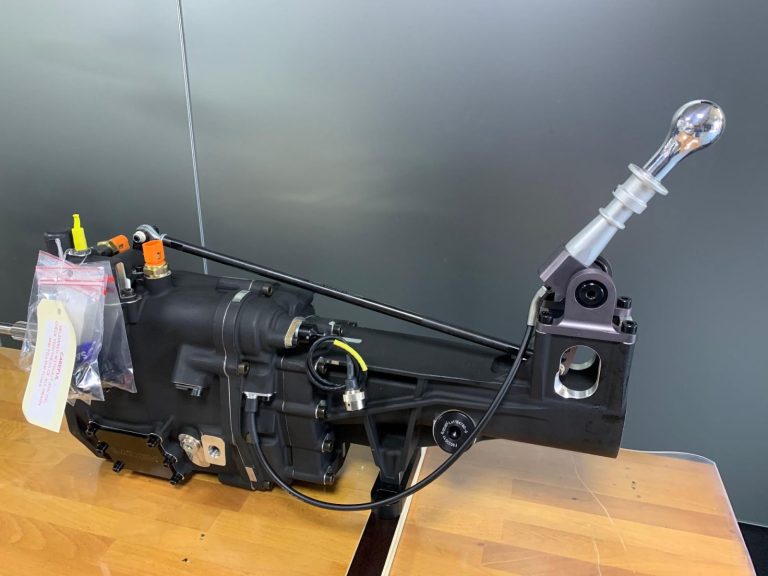
- Race gearbox wear — Straight-cut Type 9 boxes with Quaife internals need periodic rebuilds; sellers list service and rebuild dates as selling points. 11
- Driveline stress from launches — Sellers report replaced driveshafts, wheel bearings and rebuilt limited-slip differentials within a few seasons. 10
- Engine failure on older tuned units — SBD's 2.0 car needed a new engine after its Ford BDA suffered a serious internal failure. 7
- Class creep after modifications — Stickier tyres, more power or a sequential box push a road-going car into a modified or free class against faster rivals. 1
Checklist before you buy
- Petty strut and roll cage certification stickers — Scrutineers may check the petty strut sticker, and a full cage needs its own verification sticker. Cars over 2000cc need a full cage in the club series. 2
- Which class the car actually fits — Power caps (130, 155, 220 bhp), tyre lists and gearbox type decide the class. A sequential box rules out club class 4. 1
- Road documents or log book — Club classes 1-4 need V5, MOT and road tax. A car sold with no V5 may only fit class 7. 1
- Engine builder, rebuild date and dyno sheet — Sellers quote meetings since rebuild and dyno figures; ask for invoices from the named builder rather than trusting a power claim. 11
- Harness and fire extinguisher dates — Adverts state harness validity years and whether the fire system is in date; expired items must be replaced before scrutineering. 10
- Cooling system on K-series cars — Owners link K-series gasket failures to cooling and heat soak, so check coolant history and temperature control. 15
- Reverse mechanism on bike-engined cars — A reverse is compulsory; confirm the reverse box or starter reverse works and has a breather fitted. 14
- Wheel and tyre sets included — Hillclimb cars often come with separate dry and wet sets; replacing them adds to the purchase cost. 9
Running costs 13
| Rebuild interval | No fixed figure in sources; sellers quote engines with 5-6 meetings since rebuild |
|---|---|
| Typical rebuild cost | unknown |
| Consumables | Tyres to the class tyre list, fuel, entry fees, licence and safety kit. Owners estimated over £1,000 for a first season of six events, in 2000. |
| Spares availability | Chassis parts are shared with Caterham road and race cars; engines rely on specialist builders named in adverts. |
Where it races today
- Caterham and Lotus Seven Club Speed Championship · Classes 1-5 (Road-Going Specialist Production) — Split by engine size, power cap, gearbox and tyre list. Road documents required. 1
- Caterham and Lotus Seven Club Speed Championship · Classes 6-7 (Modified Specialist Production and catch-all) — Unrestricted engines and power. Frontal head restraint mandatory. Class 7 accepts a log book instead of a V5. 1
- HSA Speed Championship (2026) · B1/B2, D, F1/F2 — Road Cars Specialist Production split at 1700cc; Modified Specialist Production single class; Sports Libre split at 1700cc. 3
- British Sprint Championship (2026) · D, F1/F2 — Modified Specialist Production, and Sports Libre split at 1700cc. 4
- Motorsport UK speed events (general) · Specialist Production or Sports Libre — Specialist Production needs 20 chassis a year and a 1,000-unit engine block and head. Sports Libre takes closed-wheel cars that fit no other category. 5
- Licence · RS Interclub — The club championship asks for a Motorsport UK RS Interclub licence. 2
Market prices
- 2015 Caterham R300S, sealed 175 bhp Duratec, SADEV sequential (HSA advert, sold): 29,950 GBP (2020-09) 9
- Caterham Superlight R, 1.8 K-series about 210 bhp, 6-speed, FIA cage (HSA advert): 26,500 GBP (2021-02) 9
- Caterham 7, Raceline 2.0 Duratec 250 bhp, Type 9 with Quaife internals, 2020 hillclimb class wins (HSA advert, sold): 19,000 GBP (2021-08) 9
- Caterham 7, 2.5 Duratec 296 bhp, SADEV paddle shift, first built for European hillclimbs (Race Cars Direct, sold): 34,000 GBP (2023-03) 10
- Caterham 7, 2.0 Duratec 189 bhp, Type 9, 750MC Sports Specials winner, offered for hillclimb use (Race Cars Direct, sold) (advert undated, seen November 2026): 16,995 GBP (undated) 11
Asking prices for speed-prepared Sevens seen in 2020-2025 ran from about £17,000 to £34,000. Sequential gearboxes and high-power Duratecs sat at the top (November 2026).
Reference prices are dated and sourced; live asking prices are in the listings above.
Frequently asked questions
Can I buy a Caterham hillclimb car from the factory?
No. It is a build type, not a model. Owners start from a road or race Seven, such as a Roadsport, 310R, R300 or 420R, and prepare it for a speed class. The club's entry classes are designed around standard cars, so many people begin with an unmodified Seven 1.
Do I need a full roll cage?
Not always. The club series asks for at least an FIA or track-day roll bar plus a certified petty strut. Cars over 2000cc need a full cage, and any cage must carry a verification sticker. Check the rules of other organisers before an event 2.
Which class will my Seven run in?
What does a first season cost?
Sources give no current total. Club members estimated over £1,000 in 2000 for safety kit, licence, six entries and travel, excluding the car. Today's figures will be higher, so price a helmet, overalls, licence and entries before buying 13.
Sources
- Regulations: simple guide to class structure, Northampton Motorsport Caterham and Lotus Seven Club Speed Championship 2025, Caterham and Lotus Seven Club (2025) — Club classes 1-7, power caps, tyre lists, documents, FHR and ROPS rules, typical models
- Speed Championship: the basics, Caterham and Lotus Seven Club (2025) — 14 rounds, seven classes, best seven scores, petty strut and cage stickers, full cage over 2000cc, RS Interclub licence, safety kit
- Woodford Trailers HSA Speed Championship classes, Hillclimb and Sprint Association (2026) — HSA class codes B1/B2, D, F1/F2
- British Sprint Championship classes 2026, British Sprint Championship (2026) — Classes D and F1/F2 in the British Sprint Championship
- Motorsport UK National Competition Rules 2026, Edition 4, p. 548, Motorsport UK (2026) — Road Cars Specialist Production definition: 20 chassis a year, 1,000-unit engine
- Motorsport UK National Competition Rules 2026, Edition 4, p. 551, Motorsport UK (2026) — Sports Libre definition (closed-wheel catch-all)
- Caterham 7 - 2.0L XE, SBD Motorsport (undated) — Build timeline, BDA failure, XE swap, Quaife 4-speed, AP brakes, HSA class titles 2002-2004, Brighton Speed Trials
- Caterham, 1400cc Hayabusa, SBD Motorsport (undated) — Hayabusa engine build, British Hill Climb Championship class wins and records 2008-2009
- Cars for sale, Hillclimb and Sprint Association (2020-2022) — Dated asking prices and specs of R300S, Superlight R and Duratec Seven speed cars
- Caterham 7 300hp Sadev Sequential Paddleshift, Race Cars Direct (2023-03) — Price, 2.5 Duratec spec, European hillclimb origin, replaced driveline parts, harness validity
- Caterham 7 Championship Winner (sold), Race Cars Direct (undated) — Price, Duratec rebuild, Type 9 and LSD rebuilds, multi-use (750MC, hillclimb), no V5
- Aintree class records at June 2025, Liverpool Motor Club (2025-06) — Lotus 7 Club class records at Aintree, course length
- K Series - Simple Hillclimbing Mods (forum thread), Caterham and Lotus Seven Club forum (2000-12) — Owner first-season cost estimate, List 1A tyres in road-going classes, 6-speed advice
- Which is the best reverse box? (forum thread), Caterham and Lotus Seven Club forum (2005-05) — Reverse requirement for bike-engined cars, reverse box reliability, chain cost, breather fix, reversing record claim
- Uprated head gasket (forum thread), Caterham and Lotus Seven Club forum (2001-11) — K-series head gasket and head erosion reports, cooling and heat soak, gasket prices
Did you know
- On Aintree's 1,847 m sprint course, a 2.0 Vauxhall-engined Caterham set the Lotus 7 Club class 6 record of 45.84 s in 2005 12.
- A Caterham owner reported that his Fireblade-engined car was used for a 102 mph reversing speed record 14.
- SBD Motorsport's XE-engined Seven finished third in its class at the Brighton Speed Trials in 2002 while still in road trim 7.
In the marketplace now
View all →No exact Caterham Seven hillclimb and sprint car (build type) listed right now — here is closely related machinery on the market.