
Mazda Spec Miata (NA and NB, 1999–present)
Spec Miata is the American club-racing class for first and second generation Mazda MX-5 Miatas built from 1990 to 2005. SCCA and NASA both run it with near-identical rules, weights and restrictors. Cheap parts, huge grids and a busy used market make it the default entry car for new road racers in the US.
History
Spec Miata began as a regional class in the SCCA Southwest Division in 1999. The first race ran on 24 July 1999 at Texas World Speedway, with four starters 3. NASA's NorCal Region followed with its own first race in February 2000 3. The SCCA describes the class as more open than Showroom Stock but tighter than Improved Touring 1.
The SCCA granted national status for 2006. The first national race took place at Phoenix on 13 January 2006, and Brad Rampelberg won it 3. Andrew Caddell became the first Runoffs champion that same year 3. NASA has crowned a national champion almost every year since 2006 3.
The class mixes three engines and two chassis, so parity comes from minimum weight and intake restrictors. The 1.6 cars run without a plate at 2,275 lb, while the 2001-05 VVT cars carry a 40 mm plate at 2,450 lb 1. The SCCA restrictor table still lists past sizes of 41, 43 and 45 mm, a record of repeated rebalancing 1. In 2026 the SCCA and NASA tables show the same weights and plates 12. Engines must use Mazda OEM internals, with a 0.010 in overbore allowed for a 15 lb penalty 1. Shocks come from Bilstein or Penske through Mazda's kit, and Penskes are now compulsory at SCCA Majors and the Runoffs 1.
Later Miatas are handled elsewhere. The SCCA runs the 2006-2015 NC car in a separate Spec MX-5 class 1, which Mazda announced in 2019 3. The Global MX-5 Cup is a professional series with its own card. Vintage clubs also take the cars: SVRA runs them in Group 3 and defers to the SCCA rulebook 13.
Palmarès
Spec Miata is an amateur class, so its record is club titles. SCCA Runoffs champions include Andrew Caddell (2006), Brad Rampelberg (2007), Jim Drago (2012 and 2013) and Preston Pardus (2017, 2020, 2021) 3. The 2023 Runoffs ended with co-champions Nick Bruni and Preston Pardus, and Ethan Goulart won in 2024 3. In NASA, Todd Lamb won in 2007 and 2008 and Lincoln Larson took the 2025 title 3.
What to check before you buy
Match the firewall VIN to the model year being sold: Both SCCA and NASA classify the car by the firewall VIN, and it decides weight and restrictor. Inspect the SCCA logbook: issue date, cage description, photos and ownership changes: Only one logbook may exist per car and holding two is a rules breach. A current logbook is still not a guarantee of condition. Check the cage mounts and fit for your height: SM cages may attach only at the six required points, with at most two gussets per joint up to 0.125 in thick. Poor fit is common on older cages. Ask who built the engine, its hours, a dyno sheet and whether it is overbored: An overbored engine adds 15 lb to the minimum weight, and engine freshness drives both pace and resale value. Confirm the restrictor plate size, colour and origin on NB cars: Plates must be the listed size from Mazda Motorsports or SCCA Enterprises and unmodified: purple 38 mm on 1999-00, silver or multicolour 40 mm on 2001-05. Identify the differential type and ratio, and look at the housing ears: Only listed diffs with the 4.30 ratio are legal in SCCA, and unbraced ears can snap after contact. Inspect the front subframe welds at the lower control arm mounts: Owners report cracks at this weld, sometimes ending races. Note whether the car has Penske or Bilstein shocks: Penskes are required for SCCA Majors and Runoffs and for NASA Championships.
Versions and evolutions
| Version | Years | What changed | How to identify |
|---|---|---|---|
| NA 1.6 (1990-93) | 1990-1993 | 1.6 engine, no restrictor, lightest minimum weight at 2,275 lb. May use a cone filter and the Mazda Motorsports emulated airflow meter. Viscous or Mazdaspeed limited-slip diff, or a swap to the 1.8 diff with 4.30 ratio. 1 | Pop-up headlights; firewall VIN must match the classified year. Early cars have the short-nose crankshaft, later 1.6s the long-nose type. |
| NA 1.8 (1994-97) | 1994-1997 | 1.8 engine, no restrictor, 2,385 lb. SCCA requires the 4.30 rear axle ratio from the 1999-on cars. NASA allows the factory 4.10 regionally but mandates 4.30 at its Championships. 2 | Pop-up headlights, 1.8 engine, larger 255 mm front brakes. Check which final drive is fitted. |
| NB1 (1999-2000) | 1999-2000 | Revised 1.8 at 9.5:1 compression, 38 mm restrictor, 2,400 lb. A Mazda ECU-to-engine and injector harness kit is legal on these years only. 1 | Fixed headlights, no VVT. The restrictor plate should be the purple 38 mm part. |
| NB2 (2001-05) | 2001-2005 | VVT 1.8 at 10.0:1 compression, 40 mm restrictor, heaviest at 2,450 lb. Must remove the extra factory underbody bracing listed in the rules. 1 | Fixed headlights, VVT engine. The restrictor plate should be the silver or multicolour 40 mm part. |
Known issues
- Short-nose crankshaft on early 1.6 engines — The crank bolt loosens and the pulley erodes the key and keyway. Valve timing slips back, giving power loss below about 3,000 rpm and sometimes a wobbling pulley. unknown; usual fix is a later crank or a replacement engine 8
- Differential housing ears breaking at the factory notch — Cracked or snapped mounting arms after bump-drafting or hard kerb strikes. SCCA rules allow the ears to be reinforced. US$35 brace kit plus about US$125 welding (2022) 6
- Front subframe cracking at the lower control arm mount weld — Owners report cracks found during maintenance and one enduro retirement. SCCA allows a Mazda subframe reinforcement welded around its perimeter. 7
- Oil system locked to stock specification — Accumulators such as Accusump are banned in Spec Miata, and the OEM oil pan and windage tray must stay unmodified. Bearing health depends on build quality and oil level care. 1
- Engines lose power with hours — Top engines are not fragile but fade over time, and a fresh engine adds resale value. US$6,000-8,000 for a top-prep engine (2020) 4
- Old or poorly fitted roll cages — Older bolt-in cages can hit the driver's head or slow exit. Bars in front of the dash are a warning sign, and some old cages fail current tech. unknown; a drop floor is labour-heavy 4
- Bilstein-equipped cars are regional only — Penske SM shocks are compulsory at SCCA Majors and Runoffs and at NASA Championships, so a Bilstein car needs an upgrade to go national. about US$1,200 over Bilsteins (2020) 4
- Crash-repaired chassis — A badly repaired car may not take an alignment. SCCA rules require factory repair procedures and ban seam welding or added material. 1
Checklist before you buy
- Match the firewall VIN to the model year being sold — Both SCCA and NASA classify the car by the firewall VIN, and it decides weight and restrictor. 1
- Inspect the SCCA logbook: issue date, cage description, photos and ownership changes — Only one logbook may exist per car and holding two is a rules breach. A current logbook is still not a guarantee of condition. 1
- Check the cage mounts and fit for your height — SM cages may attach only at the six required points, with at most two gussets per joint up to 0.125 in thick. Poor fit is common on older cages. 1
- Ask who built the engine, its hours, a dyno sheet and whether it is overbored — An overbored engine adds 15 lb to the minimum weight, and engine freshness drives both pace and resale value. 1
- Confirm the restrictor plate size, colour and origin on NB cars — Plates must be the listed size from Mazda Motorsports or SCCA Enterprises and unmodified: purple 38 mm on 1999-00, silver or multicolour 40 mm on 2001-05. 1
- Identify the differential type and ratio, and look at the housing ears — Only listed diffs with the 4.30 ratio are legal in SCCA, and unbraced ears can snap after contact. 6
- Inspect the front subframe welds at the lower control arm mounts — Owners report cracks at this weld, sometimes ending races. 7
- Note whether the car has Penske or Bilstein shocks — Penskes are required for SCCA Majors and Runoffs and for NASA Championships. 2
Running costs 5
| Rebuild interval | No fixed interval in the rules. Engines fade with hours; one NASA champion planned five or more seasons from a US$2,800 used engine bought in 2022 45. |
|---|---|
| Typical rebuild cost | Top-prep engines cost about US$6,000-8,000 (2020) 4. Specialists such as Rossini Racing in North Carolina quote rebuilds on request 12. |
| Consumables | A fresh Toyo RR tyre set cost almost US$1,000 in 2023. Hawk pads ran about US$450 a season without contingency, rotors about US$60 a set 5. |
| Spares availability | Very good. Engine internals must be Mazda OEM parts sold in the US for the correct year, and Mazda Motorsports supplies the spec kits 1. |
Where it races today
- SCCA Spec Miata · SM (Regional, Majors, Runoffs) — Penske shocks and mounts required at Majors and Runoffs; Hoosier SM7.5 or RCES dry tyres. 1
- NASA Spec Miata · Spec Miata (Regional and National Championships) — Same weights and plates as SCCA in 2026. Toyo Proxes RR allowed at the first two 2026 regional weekends; non-OEM rear hubs permitted. 2
- SCCA Improved Touring · ITS (Regional) — 1999-2000 NB is listed and may run in full SM configuration and weight. 1
- SVRA · Group 3 — NA and NB Miatas prepared to the SCCA Spec Miata rules, with the same weights. 13
Market prices
- 1990 NA 1.6, SCCA and ICSCC logbooks, with AIM data (asked US$11,000 in April 2012, sold after cuts): 9,500 USD (2013-01) 10
- Used Race Engineering SM engine, under 20 hours, 123 rwhp: 3,500 USD (2012-11) 11
- Cheapest truly race-ready used cars: 6,000-10,000 USD (2020-11) 4
- Typical good used car: 10,000-20,000 USD (2020-11) 4
- Cars with national-level wins: 30,000+ USD (2020-11) 4
- Used race engine bought by a NASA regional champion: 2,800 USD (2022-01) 5
- 2005 NB, fresh X-Factor 1.8, new gearbox and clutch, asking (OBO), race-cars.com: 59,500 USD (2026-07) 9
In November 2026 racingcarnetwork.com had no Spec Miata listed 16. Fresh NB builds now ask well above the 2020 guide figures, while NA cars remain the budget route 49.
Reference prices are dated and sourced; live asking prices are in the listings above.
Frequently asked questions
Should I buy a 1.6, a 1.8 NA or an NB?
All three are legal and balanced by weight and restrictors. Most expensive top builds are NB cars, while older NA cars stay competitive locally and cost less. The 1.6 has the lowest minimum weight at 2,275 lb with driver, which heavier drivers may struggle to reach.
What is different between SCCA and NASA Spec Miata?
In 2026 weights and restrictors match. SCCA specifies Hoosier SM7.5 or RCES tyres; NASA uses Hoosier RCES and allowed Toyo RR early in the season. NASA lets 1994-97 cars keep the 4.10 diff regionally and permits non-OEM rear hubs. Check both rulebooks before buying.
Do I need Penske shocks?
Not for regional racing. SCCA requires the Penske SM shock and mount at Majors and the Runoffs, and NASA requires Penskes at Championship events. Bilstein cars remain legal at regional level. The upgrade cost about US$1,200 over Bilsteins in 2020.
What does a season cost?
One NASA regional champion reported about US$6,700 for six weekends in 2023, with entry fees the largest item. He used contingency tyres and pads and a cheap used engine. Front-runners buying fresh tyres and engines spend far more.
Is this the same as the Global MX-5 Cup?
No. Spec Miata is an amateur club class for 1990-2005 NA and NB cars run by SCCA and NASA. The MX-5 Cup is a professional series for current cars. The SCCA also runs the 2006-2015 NC car separately as Spec MX-5.
What paperwork should come with the car?
Ask for the SCCA or NASA logbook, which records the cage, photos and ownership changes. SCCA also requires a Mazda factory shop manual for the car's year in the entrant's possession. Engine build sheets and dyno results support the asking price.
Sources
- 2026 General Competition Rules, November 2026 edition, section 9.1.7 Spec Miata, SCCA (2026-11) — Weights, restrictors, engine and drivetrain rules, shocks, tyres, logbook, cage rules, Accusump ban, diff ears, subframe brace, ITS listing, Spec MX-5
- Spec Miata Official 2026 National Rules, Version 1.3, NASA (National Auto Sport Association) (2026-05) — NASA weights and restrictors, tyres, 1994-97 diff ratio, shocks, rear hubs
- Spec Miata, Wikipedia (2026) — Origin dates, first races, national status, SCCA and NASA champions, Spec MX-5 announcement
- How much does a Spec Miata cost? A buyer's guide for club racing's most popular class, No Money Motorsports (2020-11) — Price tiers, engine cost, cage and shock advice, generation choice
- How much does a season of racing Spec Miata cost?, No Money Motorsports (2024-06) — 2023 season costs, tyre, pad, rotor and used engine prices
- Bracing a Miata differential, NASA Speed News (Brett Becker) (2022-03) — Diff ear failure cause, brace kit and welding cost
- Miata front subframe reinforcement (forum thread), COMSCC forums (2017-10) — Owner reports of subframe cracks at the lower control arm mount
- Crank keyway and timing gear damage / repair (forum thread), Zuwharrie IFS Tech forum (2005) — Early 1.6 crank bolt and keyway failure, symptoms, fixes
- 2005 Mazda Spec Miata - fresh X-Factor build, race-cars.com (2026-07) — Dated asking price for a fresh NB build
- 1990 Spec Miata for sale (forum thread), ICSCC forums (2012-04) — Dated asking and sale prices for an NA 1.6
- FS: excellent, tested Race Engineering Spec Miata motor (forum thread), ICSCC forums (2012-11) — Used engine price and dyno figure
- Spec Miata Racing Engines, Rossini Racing (2026) — Engine builder services, prices on request
- SVRA Supplemental Regulations: Mazda MX-5 Miata, Group 3, SVRA (2025-01) — Vintage eligibility and weights
- Mazda MX-5 (NA), Wikipedia (2026) — Factory power of 1.6 and 1.8 NA engines
- Mazda MX-5 (NB), Wikipedia (2026) — Factory power of NB engines
- racingcarnetwork.com search: spec miata, Racing Car Network (2026-11) — No Spec Miata listed at time of writing
Did you know
In the marketplace now
View all →No exact Mazda Spec Miata (NA and NB, 1999–present) listed right now — here is closely related machinery on the market.
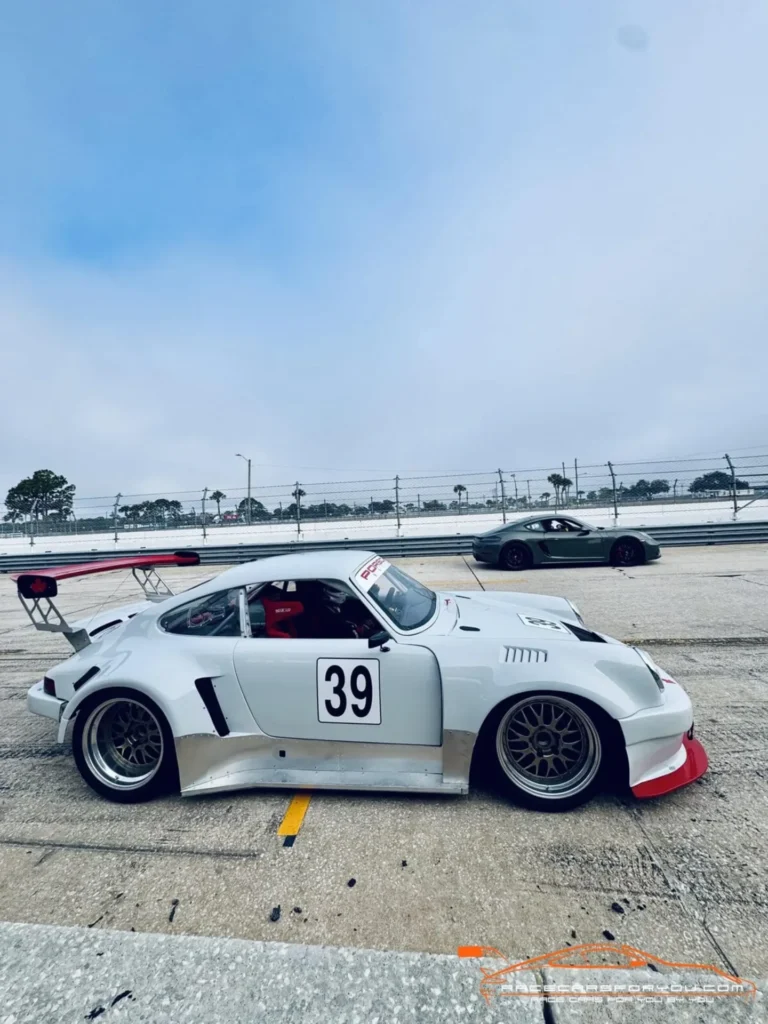
1974 Porsche 911
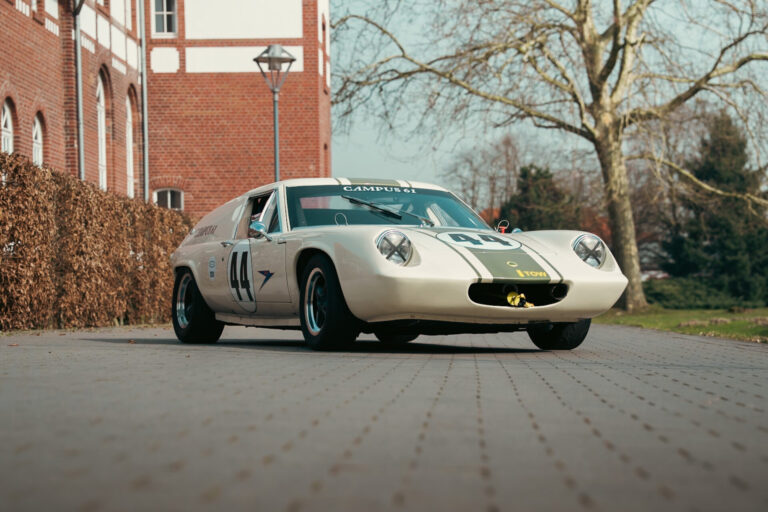
1970 Lotus Europa
AUDI RS6 C8 Avant TFSI quattro Tiptronic 600CV
1984 IMSA GTU Mazda RX7 Roger Mandeville
Cupra Leon TCR SEQ Hillclimb
Osella Pa2000 Evo Honda Mugen 330hp
Alfa Romeo GT Junior 1.6 ASI 1972