
BMW M12/7 Formula 2 engine (1973–1984)
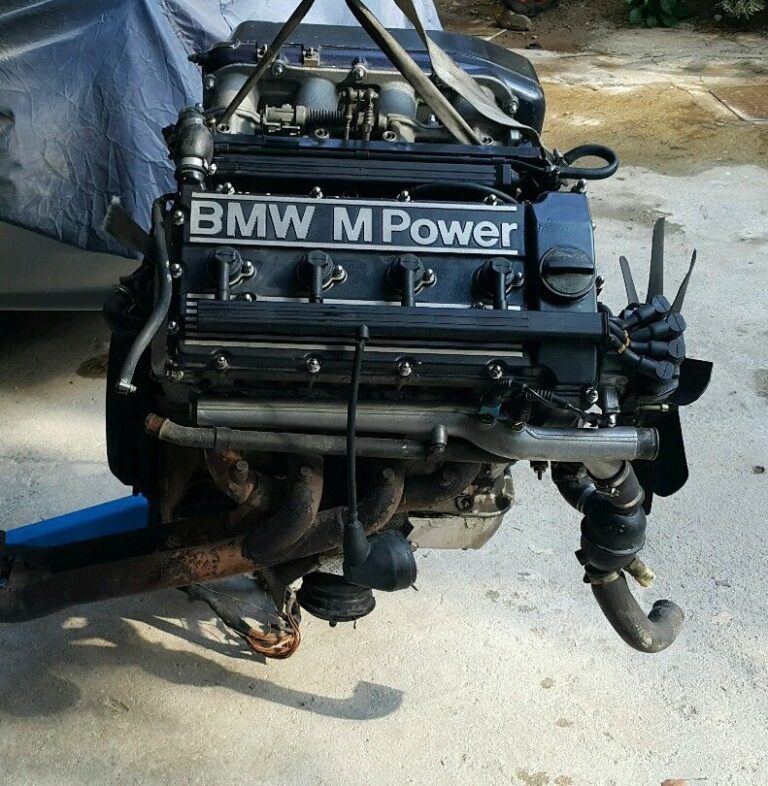
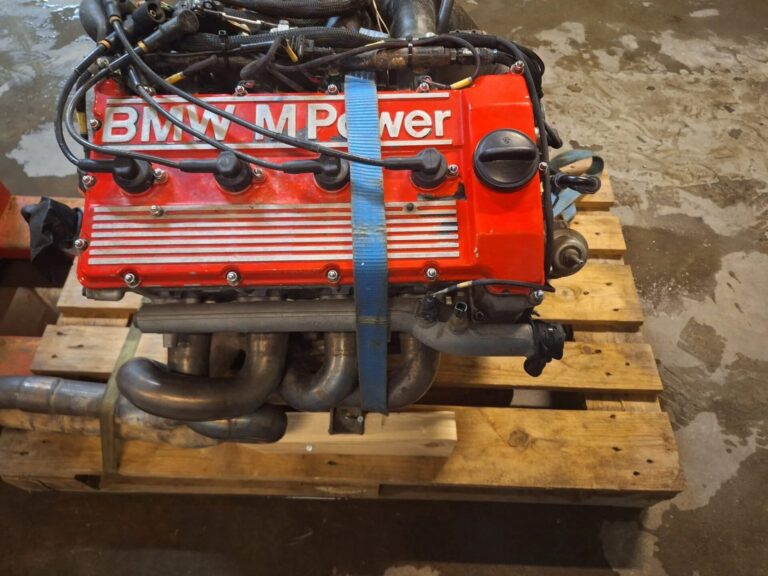
The BMW M12/7 is the 2-litre, 16-valve, dry-sump four that powered most Formula 2 winners from 1973 to 1982. Based on the M10 road block, it gives 300 to 320 hp at over 9,000 rpm. Buyers today are owners of March, Martini, Maurer and Osella cars racing in historic F2 and hillclimbs.
History
Formula 2 moved to 2-litre, production-based engines for 1972. BMW's engine man Paul Rosche enlarged the existing 1.6-litre M12 four to 2 litres, keeping the cast-iron M10 road block and the four-valve head with gear-driven cams 15. Jochen Neerpasch, newly arrived at BMW from Ford, offered March exclusive supply if March bought 50 engines. March agreed 21.
The engine debuted in the March 732 at Mallory Park in March 1973. The weekend was rough: two of the works and private engines blew in the opening laps, and a batch of suspect connecting rods was blamed. Jean-Pierre Jarier's older unit, with a different rod, ran clean and won 7. The 732 then won 11 of 17 championship races, and Jarier took the title with seven wins 23. Period results list the 1973 unit as the works-built M12/6; the M12/7 name appears from 1976 for the same basic 2-litre engine 35.
BMW engines took the European F2 title in 1973, 1974, 1975, 1978, 1979 and 1982, with Depailler, Laffite, Giacomelli, Surer and Fabi following Jarier 4. The March 782 won 11 of 12 rounds in 1978 with about 307 hp 16. By 1982 the Maurer MM82 ran Heidegger-prepared engines quoted at 320 to 330 bhp, which the team found powerful but fragile 176. Honda's V6 then took over, and the formula ended after 1984 4.
The same engine fed BMW's other programmes. It went straight into the E21 320 Group 5 car in 1977, which BMW built in about 12 weeks because the engine already existed, and McLaren North America turbocharged it for IMSA 1. Rosche's 1.4-litre turbo for the DRM led to the 1.5-litre M12/13, which won the 1983 F1 title with Piquet 1921. One source puts total M12/7 production at nearly a thousand units, which makes it one of the most numerous pure racing engines of its era 5.
Palmarès
Six European Formula 2 drivers' titles with BMW power: Jarier 1973, Depailler 1974, Laffite 1975, Giacomelli 1978, Surer 1979 and Fabi 1982 4. The March 732 won 11 of 17 rounds in 1973 and the March 782 won 11 of 12 in 1978 216. Ridgeway calls it the most successful engine of the 2-litre F2 era 1. Its turbo relative, the M12/13, won the 1983 F1 drivers' title 19.
What to check before you buy
Ask which designation and year the block and head carry, and for BMW Motorsport or tuner paperwork: 1973-75 engines were M12/6, later ones M12/7; the name on the listing is often guessed. Ask who prepared the engine (Heidegger, Schnitzer, Armaroli, Ridgeway) and to what power: A 330 bhp Heidegger spec was called very fragile in period; a 295-307 hp spec lasted better. Verify bore and stroke by measurement: 89 x 80 mm is the F2 unit: Listings exist for 1,600 cc and 2,500 cc versions on the same block; capacity sets eligibility. Have the Kugelfischer pump and injectors flow-tested, and ask when they were last calibrated: Injection faults ended races in period and the slide-type pump is the hardest item to service. Inspect the camshaft gear train for wear and backlash: Gears, not a chain, drive the cams; new gears cost £690 each. Ask for dyno sheets and whether titanium rods and valves are fitted, with their age: RCN listings advertise titanium rods, rod bolts and valves; buyers should know their hours. Confirm it matches the car's FIA HTP if you race in historic F2: Class rules require the engine type originally fitted to that model, max 2,000 cc plus 1 % on application. Check the dry-sump system is primed and oil pressure shown before any demonstration start: A 1973 engine was damaged by one unprimed start.
Versions and evolutions
| Version | Years | What changed | How to identify |
|---|---|---|---|
| M12/6 | 1972–1975 | First 2-litre version of the 1.6-litre M12. Works-built for March; 86 starts and ten wins in 1973. 3 | Period entry lists and oldracingcars race records label 1973–75 March engines M12/6; check the BMW engine number plate and any Heidegger or BMW Motorsport paperwork. |
| M12/7 | 1976–1985 | Same 2-litre layout; 315 hp at 9,500 rpm quoted; later preparation by Heidegger reached about 330 bhp. 5 | Kugelfischer slide-type pump on the inlet side, distributor on the exhaust cam, four-bolt magnesium mounting plate on Maurer installs. |
| M12/7 Group 5 (320i) | 1977–1978 | Normally aspirated 2-litre in the E21 320 Group 5 car; a McLaren North America turbo version of about 500 bhp ran in IMSA. 1 | Touring-car sump, mounts and exhaust; IMSA turbo engines have the KKK turbo and intercooler hardware. |
| M12/7 2.5-litre (Osella, Armaroli) | 1983 | Enlarged 2.5-litre version prepared by Armaroli for the Osella PA10 sports car, with a double-stud head. 14 | Listed by the seller as F1 specification with high trumpets; capacity and head studs differ from the F2 unit. |
| M12/13 turbo (F1) | 1981–1988 | 1,499 cc, 89.2 x 60 mm, KKK turbo, Bosch electronic injection; 640 hp race, 850 hp and more in qualifying. A different engine built on the same block. 21 | Short-stroke crank, turbo plumbing, electronic injection; not interchangeable with the F2 unit. |
Known issues
- Connecting-rod failures on early engines — Sudden, explosive engine failure in the opening laps; at Mallory Park 1973 debris broke a window and reached the crowd. A suspect rod batch was blamed. 7
- Fragile when pushed for top power — Heidegger-tuned 330 bhp engines in the 1982 Maurer were described as very fragile; the team logged an engine failure at Enna and many retirements. 6
- Injection faults — Mechanical slide-type Kugelfischer-Bosch system; the Maurer retired from Pau 1982 with a fuel injection fault. Pump calibration drifts and seals age. 6
- Starting without oil pressure — Dry-sump engine. In 1973 one engine was wrecked when the team started it before priming the oil system. 7
- Cam drive gears — Camshafts are gear-driven; replacement camshaft gears are listed at £690 each, so a worn gear train adds cost to any rebuild. £690 per gear (2026) 15
- Spares cost — Specialist parts remain available but dear: cam followers £31.25 each, con-rod bearing set £165, alternator cover £365. £30-700 per part (2026) 15
Checklist before you buy
- Ask which designation and year the block and head carry, and for BMW Motorsport or tuner paperwork. — 1973-75 engines were M12/6, later ones M12/7; the name on the listing is often guessed. 3
- Ask who prepared the engine (Heidegger, Schnitzer, Armaroli, Ridgeway) and to what power. — A 330 bhp Heidegger spec was called very fragile in period; a 295-307 hp spec lasted better. 6
- Verify bore and stroke by measurement: 89 x 80 mm is the F2 unit. — Listings exist for 1,600 cc and 2,500 cc versions on the same block; capacity sets eligibility. 14
- Have the Kugelfischer pump and injectors flow-tested, and ask when they were last calibrated. — Injection faults ended races in period and the slide-type pump is the hardest item to service. 6
- Inspect the camshaft gear train for wear and backlash. — Gears, not a chain, drive the cams; new gears cost £690 each. 15
- Ask for dyno sheets and whether titanium rods and valves are fitted, with their age. — RCN listings advertise titanium rods, rod bolts and valves; buyers should know their hours. 11
- Confirm it matches the car's FIA HTP if you race in historic F2. — Class rules require the engine type originally fitted to that model, max 2,000 cc plus 1 % on application. 10
- Check the dry-sump system is primed and oil pressure shown before any demonstration start. — A 1973 engine was damaged by one unprimed start. 7
Running costs 15
| Rebuild interval | No published figure found; owners' forum claims could not be opened and are listed under to_verify. |
|---|---|
| Typical rebuild cost | Not published. Parts alone are dear: cam gear £690, con-rod bearing set £165, cam follower £31.25 (Ridgeway, 2026). |
| Consumables | Avon A11 slicks are the mandated dry tyre in HSCC historic F2; one set per weekend rule. HSCC series registration £410 and entry fees aimed below £1,000 per event (2022 draft). |
| Spares availability | Ridgeway Race Engines (UK) lists about 70 M12 parts across block, head, valvetrain, gaskets, lubrication and ignition, and rebuilds the engines. BMW Motorsport stock is gone. |
Where it races today
- HSCC / HVM F2 Classic Interseries · Category 1: 2-litre Formula 2 cars — Cars built to F2, Formula B or Formula Atlantic rules 1 Jan 1967 to 31 Dec 1978, no ground-effect cars, FIA Appendix K and valid HTP required. 9
- HSCC Historic Formula 2 (2022 draft rules) · Class D, Bruno Giacomelli Trophy — 2-litre F2 cars 1972–1978; engine must be the type originally fitted; up to 1 % extra capacity on application; minimum weights 450–500 kg by year; Avon A11 tyres. 10
- Hillclimb (national) · Varies — A 321 hp M12/7 in a BMW 2002 ran the Rechberg hillclimb in 2024; check local historic or modified classes. 20
Market prices
- BMW M12/7 2.0 engine, titanium rods and valves, fresh, Seattle (RCN listing): 25,000 USD (2025-07) 11
- BMW M12/7 2.0 engine, same spec, listed as 1971, Seattle (RCN listing): 25,000 USD (2024-06) 12
- BMW M12/7 1,600 cc, 268 hp, titanium valves and rods (RCN listing, updated 2023-05): 19,000 USD (2022-02) 13
- Osella PA10 with 2.5-litre M12/7 by Armaroli, complete car, Pisa (RCN, CMS Racing Cars): POA EUR (2025-03) 14
- Camshaft gear, new (Ridgeway): 690 GBP (2026-11) 15
- Con-rod bearing set, standard (Ridgeway): 165 GBP (2026-11) 15
As of November 2025, freshly built 2-litre M12/7s are asked at about USD 25,000 on RCN, and the same engine has sat at that figure since mid-2024. Complete F2 cars are mostly priced on application.
Reference prices are dated and sourced; live asking prices are in the listings above.
Frequently asked questions
Is an M12/6 the same engine as an M12/7?
In practice yes. Period race records list the 1973 to 1975 works engines as M12/6. The M12/7 name is used from 1976 for the same 2-litre, 89 x 80 mm layout. Sellers use both names loosely, so check the engine plate and paperwork rather than the title.
How much power should a healthy one make?
Expect 295 to 315 hp at 9,000 to 9,500 rpm from a durable spec. Period Heidegger engines were claimed at 330 bhp but were called fragile. A current hillclimb engine runs 321 hp and past 10,000 rpm. Ask for a recent dyno sheet.
Can I run it in HSCC historic F2?
Yes, in the 2-litre category, if your chassis dates from 1972 to 1978, is not a ground-effect car and holds an FIA HTP. The engine must be the type originally fitted to that model. The 1979 to 1984 cars are outside the current F2 Classic window.
Who rebuilds them today?
Ridgeway Race Engines in the UK builds and rebuilds M12s and stocks about 70 parts, from gaskets to cam gears. The Osella listing names Armaroli in Italy for a 2.5-litre version. Ask any seller which shop last had the engine open.
What does an M12/7 cost?
Two fresh engines on RCN have been asked at USD 25,000, one since June 2024 and one since July 2025. A 1,600 cc version was listed at USD 19,000. Budget for a pump service and cam gears on top, since a single gear costs £690.
What is the difference from the M12/13 F1 turbo?
The M12/13 uses the same block family but a 1,499 cc, 89.2 x 60 mm short-stroke layout, a KKK turbo and electronic injection. It made 640 hp in races and far more in qualifying. Parts are not interchangeable with the 2-litre F2 engine.
Sources
- BMW M12 Engine History, Ridgeway Race Engines (2025) — specs 1991cc 89x80 13:1 Kugelfischer, 300bhp over 9000rpm, 50-engine March deal, Mallory 1973, 6 titles, 320 Group 5, IMSA turbo, M12/13 figures
- March 732 car-by-car histories, OldRacingCars.com (2024) — Neerpasch deal, 50 engines, 11 of 17 wins, 17 cars built, M12/6 naming
- Formula 2 1973 season, OldRacingCars.com (2024) — works-built M12/6, 86 starts ten wins, Jarier seven wins, Schnitzer 20-4
- European Formula Two Championship, Wikipedia (2025) — champions table 1973–1984 and engines
- M Division's Greatest Competition Engines, Infernalco (2018-03) — M12/6 became M12/7 in 1976, 1999cc, 315hp at 9500rpm, 251Nm, nearly a thousand built
- Maurer MM82 BMW, primotipo (2024-01) — Heidegger-prepared fragile engines, 305 and 330bhp, Kugelfischer-Bosch slide type, distributor on exhaust cam, 1982 retirements, mounting plate
- F2 Review (Mallory Park, April 1973), Motor Sport (1973-04) — engine failures at debut, suspect rods, unprimed oil start, Jarier win
- Formula Two Review (June 1976), Motor Sport (1976-06) — 295 bhp works March-BMW engines, Schnitzer-BMW Osella
- F2 Classic Interseries 2024 announcement, Historic Sports Car Club (2023-09) — categories, 1967–1978 window, no ground effect, Appendix K and HTP
- HSCC Historic Formula 2 International Series Draft Regulations 2022, Historic Sports Car Club (2021-11) — Class D 2-litre 1972–1978, engine type originally fitted, 1% capacity, weights, Avon A11, £410 registration
- BMW M12/7 2.0L Engine (1978) listing, Racing Car Network (2025-07) — USD 25,000 asking, titanium rods and valves, 89x80, Seattle
- BMW M12/7 2.0L Engine (1971) listing, Racing Car Network (2024-06) — USD 25,000 asking, same spec
- BMW M12/7 1600 Engine listing, Racing Car Network (2022-02) — USD 19,000 asking, 1600cc 268hp Wasseman
- Osella PA10 BMW 2500cc M12/7 listing, Racing Car Network / CMS Racing Cars (2025-03) — 2.5-litre Armaroli version, double-stud head, POA
- BMW M12 Parts, Ridgeway Race Engines (2026-11) — parts list and prices: cam gear £690, cam follower £31.25, rod bearings £165, alternator cover £365, ~70 items
- March 782, Wikipedia (2025) — 307 hp, 11 of 12 wins 1978, Giacomelli and Surer
- Maurer MM82, Wikipedia (2025) — M12/7 320 hp, 515 kg car
- File:BMW M12-7 BMW-Museum.JPG, Wikimedia Commons (2012-11) — image, author Olli1800, CC BY-SA 3.0
- Raw Power: the BMW M12/13 F1 engine, Historic Motorsport Consulting (2014-04) — M10 block lineage, Rosche 1.4 turbo for DRM, 1499cc 89.2x60, Piquet 1983
- Hear this BMW 2002 with Formula 2 engine rev to 10,800 rpm, BMWBLOG (2024-05) — 321 hp M12/7, over 10,000 rpm, Rechberg hillclimb 2024
- BMW M12, Wikipedia (2025) — M12/13 1499.8cc, 89.2x60, 640/850 hp, F1 1981–1988, KKK turbo
- 1974 March 742 Formula 2 (sold), race-cars.com (2025) — M12/7 with Kugelfischer injection and 16-valve aluminium head