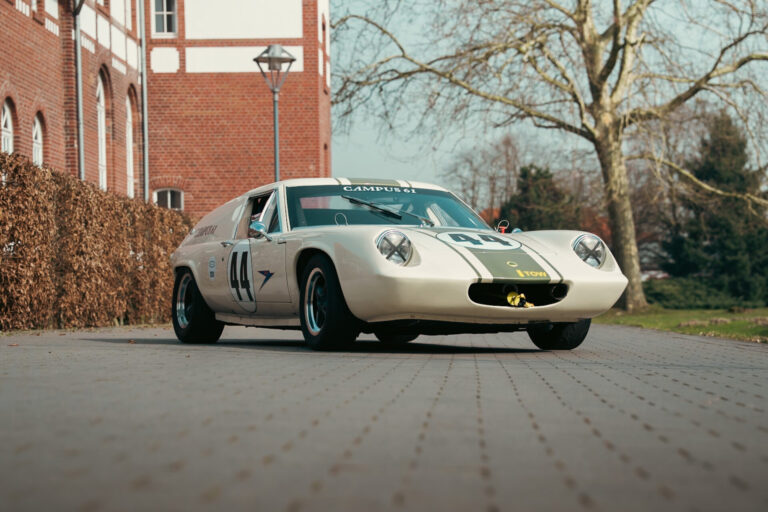

Lotus Elise GT1 (1997)
The Elise GT1 was Lotus's 1997 FIA GT1 car, built on a stretched Elise aluminium structure with Chevrolet or Lotus V8 power. Seven race cars and one road car exist. It won nothing, which keeps it rare and comparatively obscure. Today it is a collector piece and a listed entry for Masters Endurance Legends GT1 grids.
History
The Elise GT1 was Lotus's entry for the 1997 FIA GT Championship, which succeeded the BPR series. It replaced the Esprit GT1 and carried the internal code Type 115 12. Julian Thomson styled the carbon composite body 2. Underneath sat a much altered Elise structure of bonded aluminium extrusions supplied by Hydro Aluminium 2. GT1 rules required a road version, and Lotus built a single example 13.
Most sources count seven race chassis plus the road car, though one account gives eight chassis in total 128. Wikipedia credits G.T.I. Racing with building the race cars, while a dealer listing and Secret Classics name G-Tech 178. The planned engine was the Esprit's 3.5-litre Type 918 twin-turbo V8. FIA restrictor changes cut its output by roughly 100 hp 2. The factory team switched to a Chevrolet LT5-based V8, an engine Lotus had helped develop for the Corvette ZR-1 3. Most privateer cars kept the turbo unit 8.
The season went badly. All four cars that started the Hockenheim opener retired with alternator failures 2. GBF UK's fifth place at Helsinki earned the team two points and eighth in the standings 2. The factory pair of Jan Lammers and Mike Hezemans peaked with ninth at Laguna Seca 5. After 1997 Lotus, then owned by Proton, ended the programme 18.
The cars then scattered. Toine Hezemans took the spares and two factory cars to the Netherlands 1. His son Mike turned two chassis into the Viper V10 Bitter GT1 for 1998, and neither finished a race 23. One was later returned to Elise form; the other survives as a Bitter 2. Team Elite ran chassis 05 at the 2004 Sebring 12 Hours, where the gearbox failed after seven laps 3. Today the model is listed for Masters Endurance Legends GT1 grids and appears at demonstrations 39.
Palmarès
The Elise GT1 never reached a podium. In the 1997 FIA GT Championship, GBF UK's fifth at Helsinki was the best result 2. It came from tenth on the grid and brought the only points 2. Other finishes included eighth at Spa and 11th at the Nürburgring and Mugello 15. One car started Le Mans in 1997 and retired with engine failure after 121 laps 1. In the American rounds the Lammers and Hezemans car was 13th at Sebring and ninth at Laguna Seca 5. The factory team scored no points 1. Both Bitter GT1 derivatives retired from their only race in 1998 2. Chassis 05 made the last known period start at the 2004 Sebring 12 Hours, classified 43rd 23.
What to check before you buy
Match the chassis number to both archive numbering systems and to its race record: Racing Sports Cars lists cars as 115-0x and as Elise-97/xx, and notes at least one unknown real number. Confirm which engine is fitted and whether period engines come with the car: Cars ran LT5, Type 918 turbo or pushrod Chevrolet units, and Masters lists the turbo version separately. Ask whether the car was ever a Bitter GT1 or the 2004 Team Elite prototype: Two chassis were rebuilt as Bitters and one later reverted; chassis 05 was converted for Sebring 2004. Identify the gearbox make and its rebuild records: The original Hewland sequential was replaced on some cars, and gearbox failures recur in the car's history. List the spares package item by item: A recent dealer car came with two extra sets of Speedline wheels, an air-jack lance, a steering rack and battery carrier. Such parts are hard to replace. Get written eligibility from the organiser for the season you plan to race: Masters lists the Elise GT1 for MEL1 in 2026; Peter Auto's page does not name the model. Document post-1997 use, such as the 2000 Silverstone race or 2001 Super Car Rally: At least one car was rallied on the road and later used for track days, which adds wear and changes provenance.
Versions and evolutions
| Version | Years | What changed | How to identify |
|---|---|---|---|
| Factory LT5 race car | 1997 | Chevrolet LT5-based four-cam V8 of about 5.7 L, flat-plane crank, about 600 PS. Run by GT1 Lotus Racing and First Racing, also used by Veyle Racing. 1 | Naturally aspirated V8 with no turbochargers; period entries under GT1 Lotus Racing or First Racing Project names. |
| Type 918 turbo race car | 1997 | Lotus 3.5 L twin-turbo V8 from the Esprit, Garrett and later KKK turbochargers, about 550 PS under restrictors. 2 | Twin turbochargers and intercoolers; Masters lists it separately as Elise GT1 Turbo. GBF UK was the main user. |
| US-round factory spec | 1997 (Sebring and Laguna Seca) | Factory cars ran 2-valve, NASCAR-based Chevrolet V8s with cast-iron blocks in the two American rounds. 1 | Check engine type against the car's late-1997 history; a pushrod Chevrolet in place of the LT5 is a clue. |
| Road car | 1997 | Single homologation car with the Type 918 twin-turbo V8 and a Renault 5-speed manual gearbox; about 1,050 kg. 3 | Only one exists. Goodwood reported in 2017 that it never left Lotus ownership. |
| Bitter GT1 | 1998 | Two chassis rebuilt by the Hezemans team with Viper GT2-derived 8.0 L V10s and a longer, more aerodynamic nose under the Bitter name. 2 | Longer front bodywork and a V10 engine. One survives in Bitter form; the other was rebuilt as an Elise GT1. |
| Team Elite prototype conversion | 2004 | Chassis 05 entered at Sebring in the prototype class with a Corvette-based engine. 2 | Chassis 05 history; ask whether any 2004 prototype modifications remain. |
Known issues
- Charging system failures — All four cars that started the 1997 Hockenheim opener retired with alternator failures. Ask what was changed afterwards. 2
- Gearbox overload — Factory cars retired at Silverstone 1997 with gearbox trouble. The Bitter V10 broke its gearbox, and chassis 05 lost its transmission at Sebring 2004. 1
- Undeveloped LT5 installation — The Chevrolet V8 arrived too late for proper testing in 1997, so period reliability data is thin. 2
- Type 918 turbo engine reliability — Goodwood reports the Esprit-derived turbo V8 was tried first and was not especially reliable. 3
- Engine failure in long races — The only 1997 Le Mans starter retired after 121 laps with engine failure. 1
- Confused chassis identities — Racing archives use two numbering systems (115-0x and Elise-97/xx), and one archive marks a car's real number as unknown. Some chassis changed between Elise and Bitter form. 4
- Very small parts pool — Seven race chassis, three different engine families and bespoke bodywork mean most parts must be sourced from other owners or made new. 1
Checklist before you buy
- Match the chassis number to both archive numbering systems and to its race record. — Racing Sports Cars lists cars as 115-0x and as Elise-97/xx, and notes at least one unknown real number. 4
- Confirm which engine is fitted and whether period engines come with the car. — Cars ran LT5, Type 918 turbo or pushrod Chevrolet units, and Masters lists the turbo version separately. 9
- Ask whether the car was ever a Bitter GT1 or the 2004 Team Elite prototype. — Two chassis were rebuilt as Bitters and one later reverted; chassis 05 was converted for Sebring 2004. 2
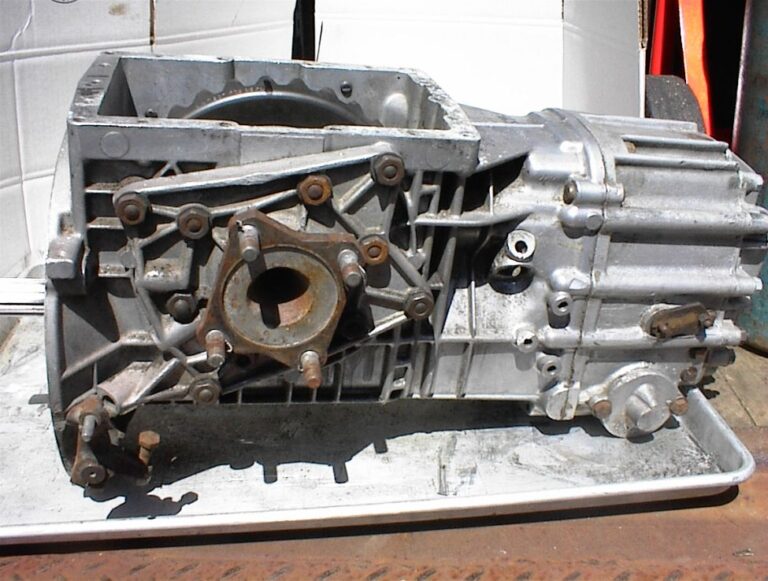
- Identify the gearbox make and its rebuild records. — The original Hewland sequential was replaced on some cars, and gearbox failures recur in the car's history. 1
- List the spares package item by item. — A recent dealer car came with two extra sets of Speedline wheels, an air-jack lance, a steering rack and battery carrier. Such parts are hard to replace. 7
- Get written eligibility from the organiser for the season you plan to race. — Masters lists the Elise GT1 for MEL1 in 2026; Peter Auto's page does not name the model. 9
- Document post-1997 use, such as the 2000 Silverstone race or 2001 Super Car Rally. — At least one car was rallied on the road and later used for track days, which adds wear and changes provenance. 7
Running costs 2
| Rebuild interval | unknown; no published engine or gearbox life figures found |
|---|---|
| Typical rebuild cost | unknown |
| Consumables | Bespoke wheels, carbon-ceramic brakes as built and sequential gearbox internals; sellers bundle spare wheel sets because they are scarce 27 |
| Spares availability | Very limited. Seven race cars, a one-season factory programme and three engine families mean no dedicated parts stock is known 12 |
Where it races today
- Masters Endurance Legends 1 (2026) · GT1 Cars (up to 2012) — Eligibility list names both 'Lotus Elise GT1' and 'Lotus Elise GT1 Turbo'. 9
- Global Endurance Legends · GT1 — Named by a dealer listing and by Secret Classics as a series open to the car; check the current rules. 7
- Peter Auto Endurance Racing Legends · GT1 (1990s/2000s GTs) — The series takes 1990s GT1 cars such as the McLaren F1 GTR and Porsche 911 GT1. Lotus is not named, so confirm with the organiser. 10
- Goodwood Members' Meeting demonstrations · GT1 demonstration — An Elise GT1 ran in the GT1 demonstration at the 75th Members' Meeting in 2017. 3
Market prices
- 1997 Elise GT1 race car on eBay, high bid, reserve not met: just over 205,000 USD (2007-05) 11
As of 2026-11 no confirmed public sale with a published price was found. Recent dealer listings for ex-Hezemans cars were price on application, and RCN had no listings.
Reference prices are dated and sourced; live asking prices are in the listings above.
Frequently asked questions
How many Lotus Elise GT1s were built?
Most sources say seven race chassis plus one road car built for homologation. One account counts eight chassis including the road car. Two race chassis became Bitter GT1s in 1998, and one later returned to Elise form. Expect very few cars to change hands in any decade.
Which engine should an Elise GT1 have?
There is no single answer. Factory cars used a Chevrolet LT5-based V8. Most privateer cars used the Lotus Type 918 twin-turbo V8, and the US rounds saw pushrod Chevrolet engines. Check the engine against the chassis history, since Masters lists the turbo car as a separate entry.
Can I race an Elise GT1 in historic events today?
Yes, in principle. The 2026 Masters Endurance Legends 1 eligibility list includes the Elise GT1 and the Elise GT1 Turbo in its GT1 class. Peter Auto's Endurance Racing Legends takes 1990s GT1 cars, but does not name the Lotus. Ask each organiser before buying.
Is the road car for sale?
No sale has been recorded. Goodwood reported in 2017 that the single road car never left Lotus ownership. Wikipedia says its location is uncertain and suggests either a Lotus store or a Dutch collection. Treat any 'road-going Elise GT1' offer with caution, as many ordinary Elise S1 adverts use the GT1 label.
What did an Elise GT1 sell for?
Public price data is thin. A 1997 car on eBay in 2007 drew a high bid of just over 205,000 US dollars without meeting its reserve. More recent dealer listings were price on application. Values should be judged on chassis history, engine type and spares.
Sources
- Lotus Elise GT1, Wikipedia (2026) — Build count, engines, weights, gearboxes, team list, 1997 race outcomes, road car, later history
- Lotus Elise GT1 (Wouter Melissen), Revs Institute — Chassis construction and suppliers, engines, restrictor power loss, Hockenheim alternator failures, GBF results, Bitter GT1, 2004 Sebring
- Four reasons the Lotus Elise is actually the coolest GT1 car (Ethan Jupp), Goodwood Road & Racing (2017-04) — LT5 engine origin, turbo engine reliability, road car ownership, Bitter GT1, Team Elite 2004, 75th Members' Meeting demo
- Lotus Elise GT1 type page, Racing Sports Cars (2026) — Chassis numbers 115-02 to 115-07, event counts
- Complete Archive of Chassis Elise-97/14#, Racing Sports Cars (2026) — Factory car race-by-race results 1997, Sebring and Laguna Seca finishes
- Chassis 115-06, Racing Sports Cars (2026) — Chassis numbering and First Racing Project entries
- 1997 Lotus Elise GT1 listing 9030814, PistonHeads (2018) — Ex-Hezemans car history, Type 918 engine, spares package, claimed MEL and Global Endurance Legends eligibility
- Lotus Elise GT1 (Matthias Kierse), Secret Classics (2018-09) — G-Tech as builder, eight-chassis count, engine split between factory and private cars, later chassis fates
- MEL 1 Eligibility List 2026 Edition, Masters Historic Racing (2026-04) — Elise GT1 and Elise GT1 Turbo listed in GT1 Cars (up to 2012)
- Endurance Racing Legends, Peter Auto (2026) — Series scope for 1990s and 2000s GT1 cars
- All'asta su Ebay: Lotus Elise GT1, Autoblog.it (2007-05) — eBay high bid and unmet reserve
Did you know
In the marketplace now
View all →No exact Lotus Elise GT1 (1997) listed right now — here is closely related machinery on the market.