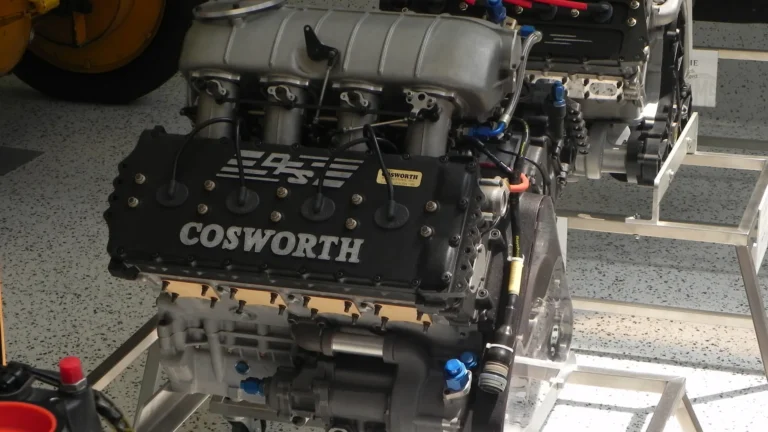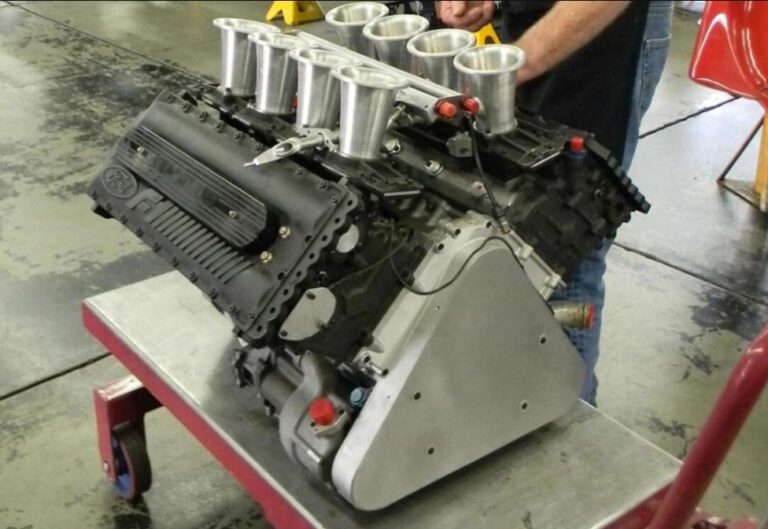

Cosworth DFV
The DFV is the engine that democratised Formula 1: Cosworth's 3-litre V8 — 155 Grand Prix wins, twelve drivers' titles — that any team could buy, and that historic racing's entire DFV era still runs on.
History
Ford's £100,000 commission to Keith Duckworth produced motorsport's most consequential engine: the Double Four Valve (1967), a 3-litre V8 whose four-valve heads (the FVA's lessons doubled) made ~408 hp at launch and whose availability — sold to anyone with the money — rewrote Formula 1's structure: Lotus's debut wins with the 49, then fifteen seasons in which garagiste teams (Tyrrell, Williams, McLaren, Brabham and the rest) beat factory exotica with the same catalogue engine, accumulating 155 championship GP wins and twelve drivers' titles before turbos closed the era.
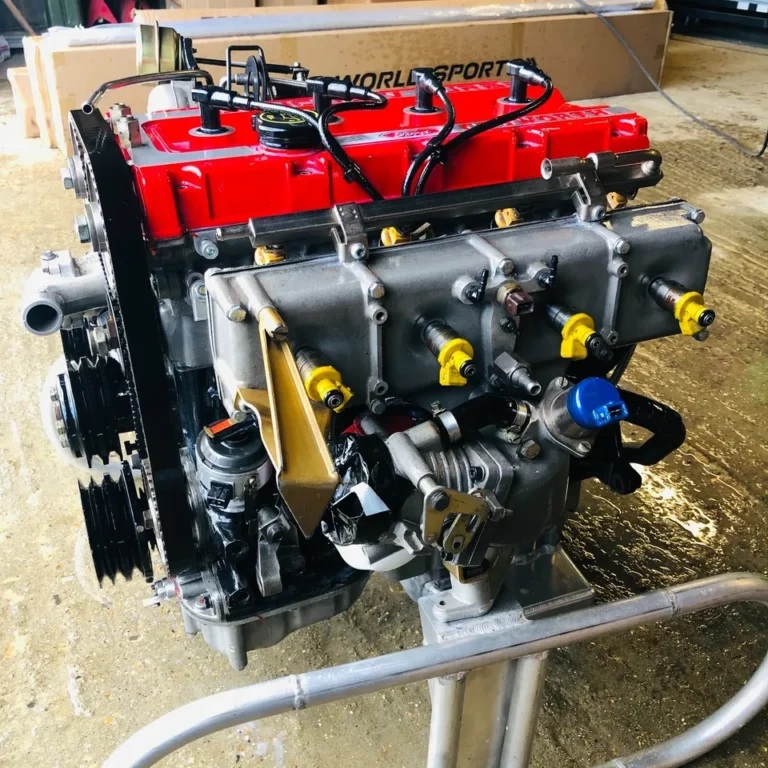
The derivative tree spread the empire: DFW Tasman variants, DFX turbo dominating Indianapolis for a decade, DFL endurance stretches, DFY and DFZ/DFR closing the F1 line — Cosworth architecture powering essentially every category that mattered.
Historic racing is the DFV's third act: Masters Historic F1's grids run on it wholesale, the rebuild priesthood (a handful of British specialists whose slots are booked seasons ahead) sustains the fleet, and the engine trades as blue-chip motorsport hardware — priced by builder, hours and specification in a market where 'fresh DFV by a name shop' is a five-figure sentence everyone understands.
Palmarès
155 Formula 1 World Championship race wins 1967–83 — twelve drivers' and ten constructors' titles; Le Mans wins in DFL-lineage forms; the DFX's Indianapolis 500 decade — the most successful racing engine ever built.
What to check before you buy
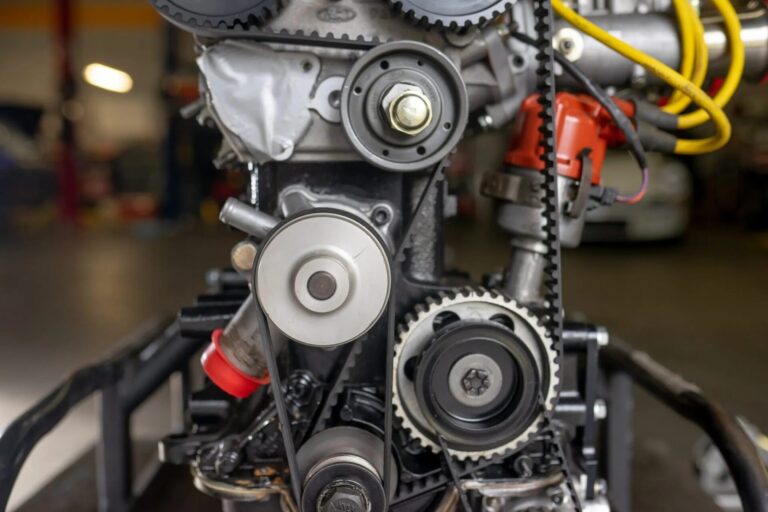
Builder and hours are the market: the DFV rebuild circle is small and known — verify which shop built the unit, to what specification (period versus development internals; short-stroke variants and cam choices change character and eligibility), hours since refresh and the dyno sheet. Provenance to period chassis adds collector weight; matching-numbers claims deserve register verification. Ask the spec_note question the KB has always carried: which builder last had it apart, and when. Budget rebuild-slot lead times (seasons, not weeks) into campaign planning. A supported DFV is historic racing's most rational exotic engine — an orphan build is a very heavy paperweight.
Did you know
- Ford's entire DFV investment was £100,000 — cost-per-championship the best deal in motorsport history, by orders of magnitude.
- The 'garagiste' era exists because of this engine: teams without factories beat Ferrari for fifteen years with an engine anyone could order.
- DFV rebuild slots book seasons ahead — the priesthood's waiting lists are historic racing's true championship calendar.
In the marketplace now
View all →No exact Cosworth DFV listed right now — here is closely related machinery on the market.