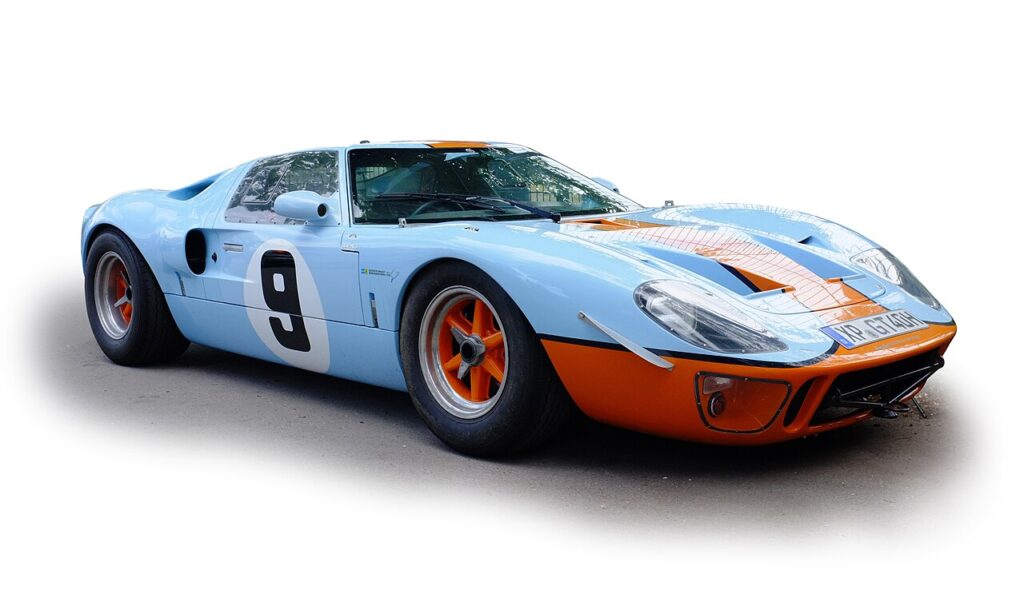
Ford GT40
Born from Ford's feud with Ferrari, the GT40 won Le Mans four consecutive times (1966–1969) — including the famous 1966 1-2-3 — and remains the definitive American endurance icon and the most faithfully recreated racing car in history.
History
When Enzo Ferrari walked away from Ford's 1963 acquisition bid, Henry Ford II commissioned revenge by racetrack. The GT40 programme began with Lola's Eric Broadley and Ford Advanced Vehicles in Slough, matured through Carroll Shelby's American operation and Holman & Moody, and after painful 1964–65 failures produced total victory: the 7-litre Mk II's staged 1-2-3 at Le Mans 1966, the all-American Mk IV win of 1967 (Foyt/Gurney, still the only all-American car-team-drivers victory), and back-to-back wins for the Gulf-liveried 4.9-litre Mk Is of John Wyer in 1968–69 — chassis P/1075 winning twice, Jacky Ickx's 1969 margin a few hundred metres after 24 hours.
Production totalled roughly 105 cars across Mk I–IV plus road-going Mk IIIs, and privateer GT40s stayed competitive into the early 1970s. The silhouette became so canonical that a continuation industry grew around it — from Safir's sanctioned GT40P run to Superformance's toolroom-grade cars — making 'GT40' simultaneously an eight-figure original and an accessible historic-racing platform.
Original chassis are catalogued car-by-car in the marque registries; the 1966–69 winners live in museums and top collections, while 'ordinary' originals and quality continuations populate historic endurance grids from Le Mans Classic to Spa Six Hours.
Palmarès
Le Mans overall winner 1966, 1967, 1968, 1969; the 1966 1-2-3 formation finish; World/International Championship for Makes titles 1966 and 1968; Daytona 24 and Sebring 12 wins; and Gulf-Wyer's 1968–69 campaigns that beat newer prototypes with a supposedly obsolete design — plus half a century of historic-racing victories since.
What to check before you buy
First establish what the chassis actually is: original P-number car, Safir GT40P continuation, or replica/toolroom copy — the bands differ by orders of magnitude and the registries settle identity. For originals, continuous history and tub originality (period crash repairs are documented car-by-car) dominate; matching engines matter less than in road-car collecting, since period units were swapped freely. Continuations and Superformance-grade cars trade on build quality, FIA HTP papers and race preparation — a proven Le Mans Classic front-runner carries a clear premium over a show car.
Did you know
- The name comes from the roof height: 40 inches. Drivers over six feet needed the famous 'Gurney bubble' roof blister to fit — original bubbles now add value.
- The staged 1966 photo-finish backfired: officials awarded the win to McLaren/Amon over Miles/Hulme on distance-travelled technicality, costing Ken Miles a unique triple crown.
- Chassis P/1075's two consecutive Le Mans wins (1968–69) were not matched by any single chassis again until Toyota's hybrid era.
In the marketplace now
View all →No exact Ford GT40 listed right now — here is closely related machinery on the market.
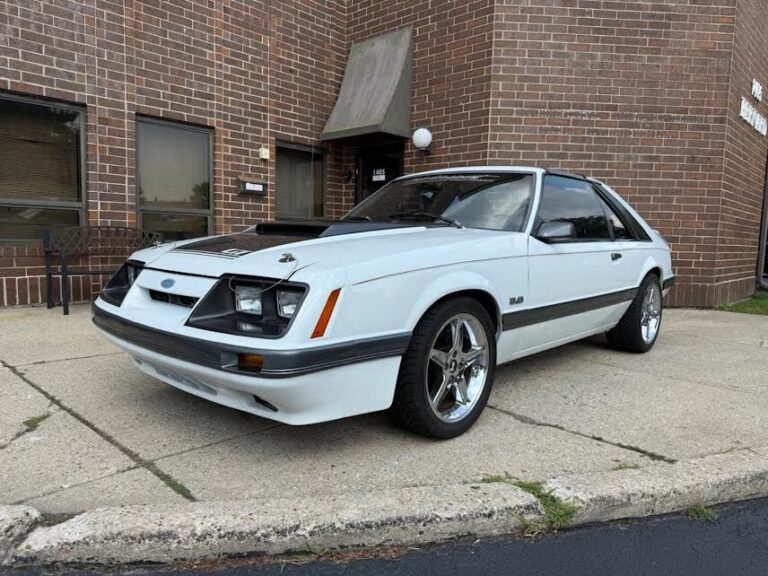
1986 Ford Mustang GT – T-Top – 5spd
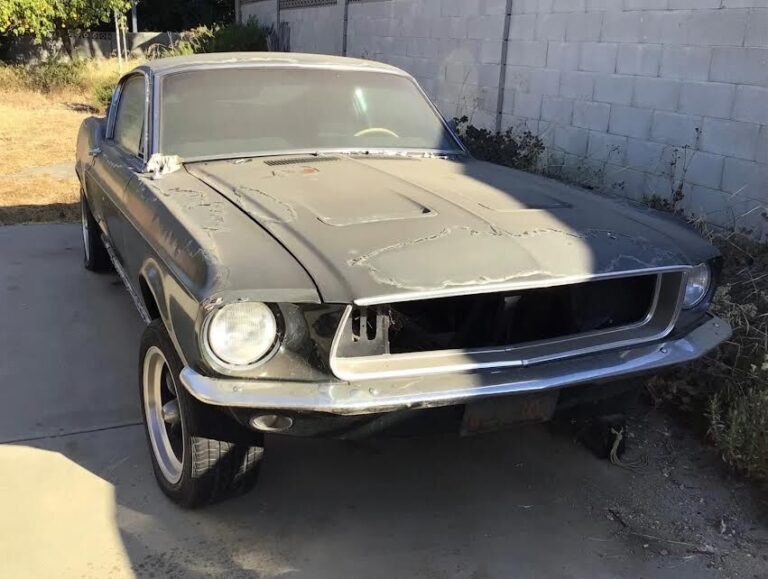
1968 Ford Mustang
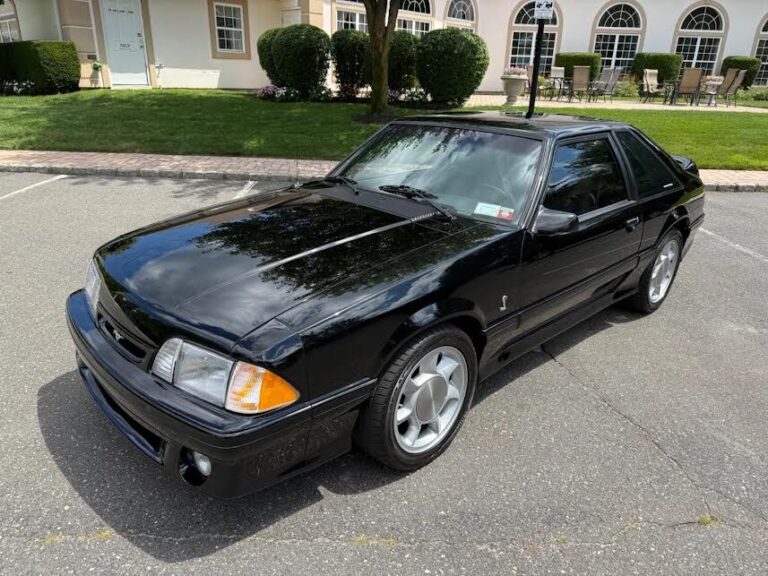
1993 Ford Mustang COBRA
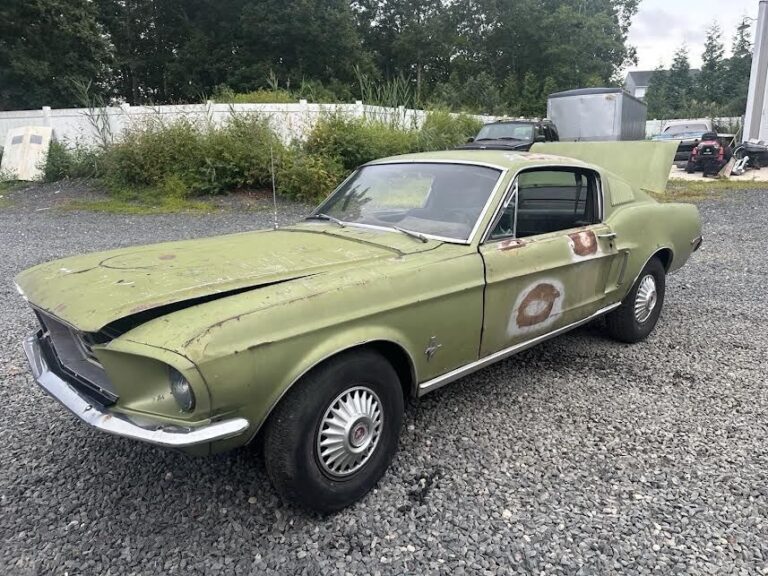
1968 Ford Mustang 1968 mustang fastback original car

1967 Ford Mustang 1967 Ford Mustang Fastback A Code
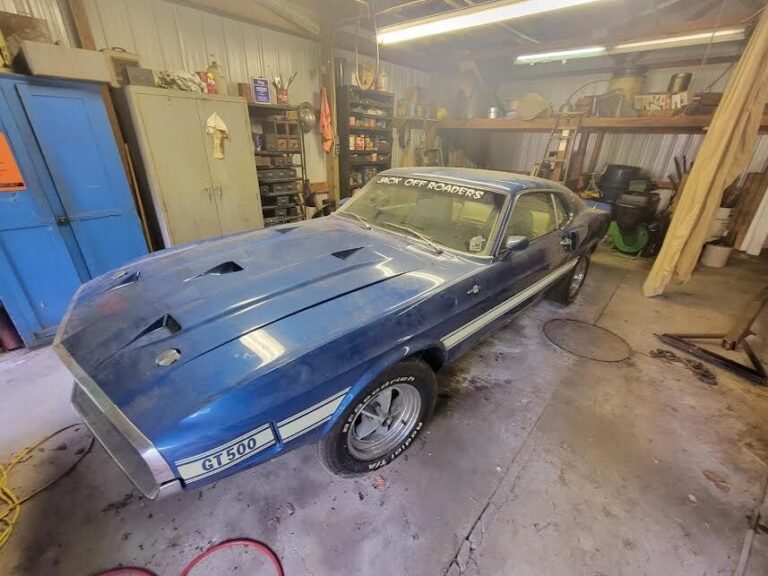
1969 Ford Mustang
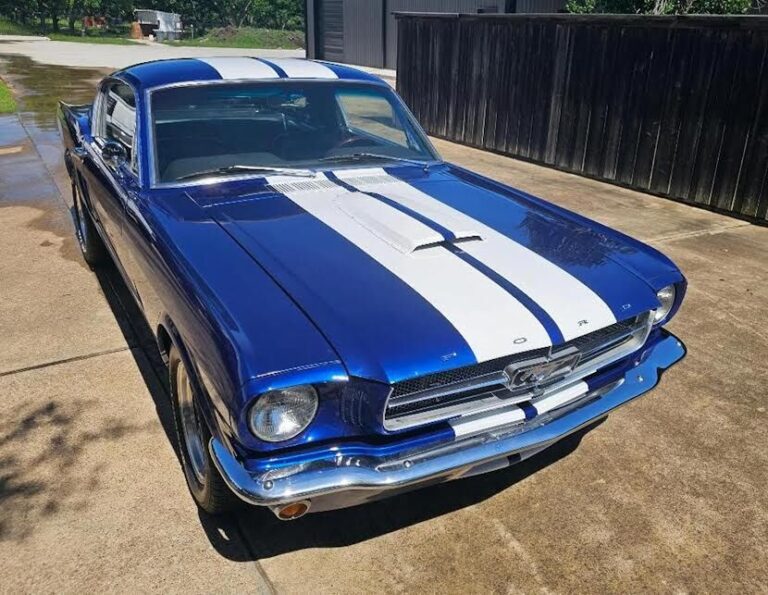
1965 Ford Mustang 1965 Ford Mustang GT350 5speed Fastback
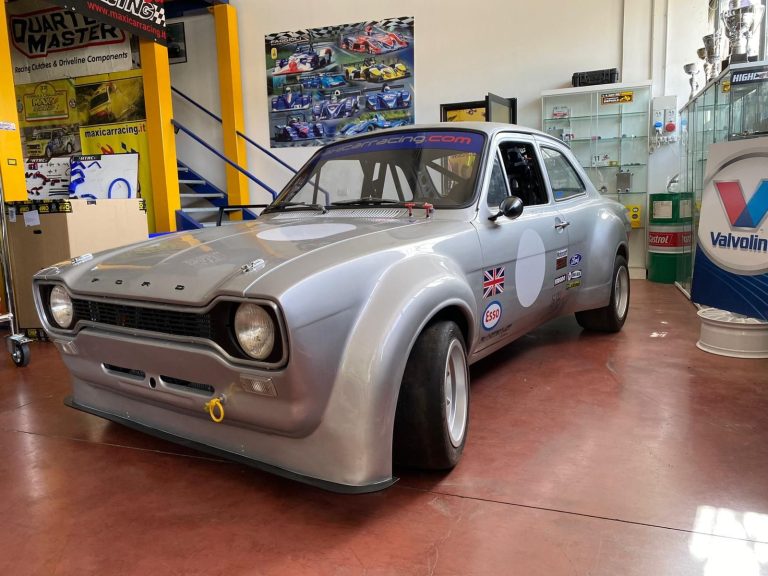
Ford Escort RS 2000 MK1 1970
Parts, spares & upgrades
Browse parts →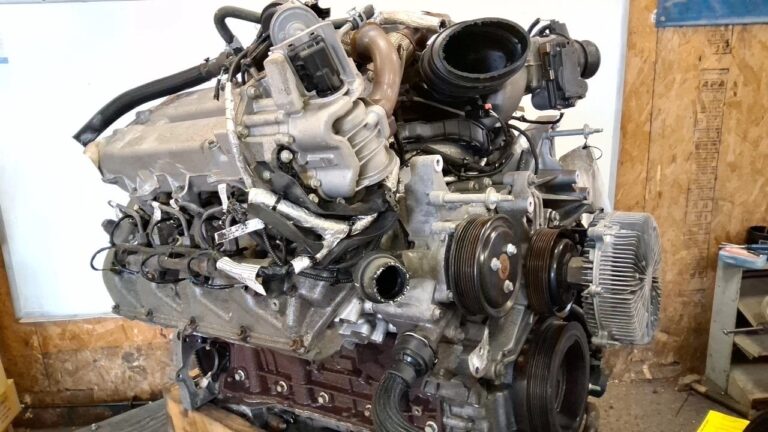
2020 Ford F350 Super Duty 6.7L Engine Motor OEM 27K Miles
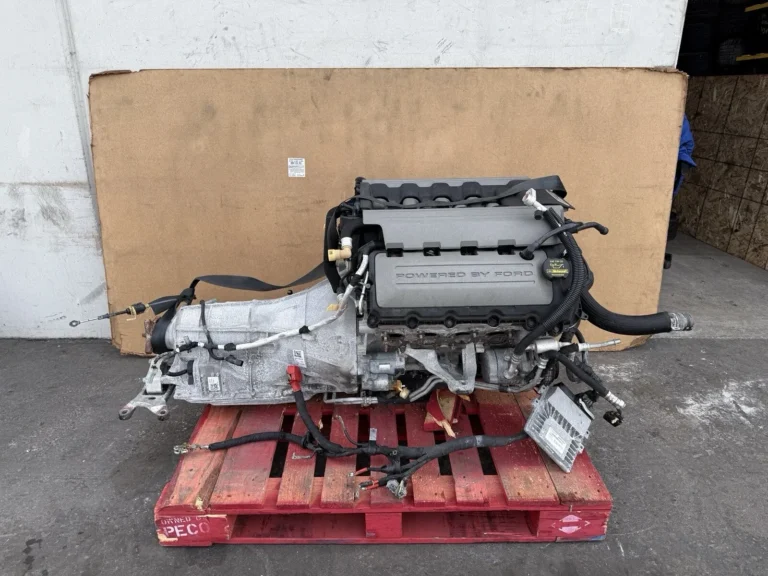
FORD MUSTANG GT 15-17 OEM ENGINE W/ AUTOMATIC TRANSMISSION SWAP ASSY 5.0L V8 62K
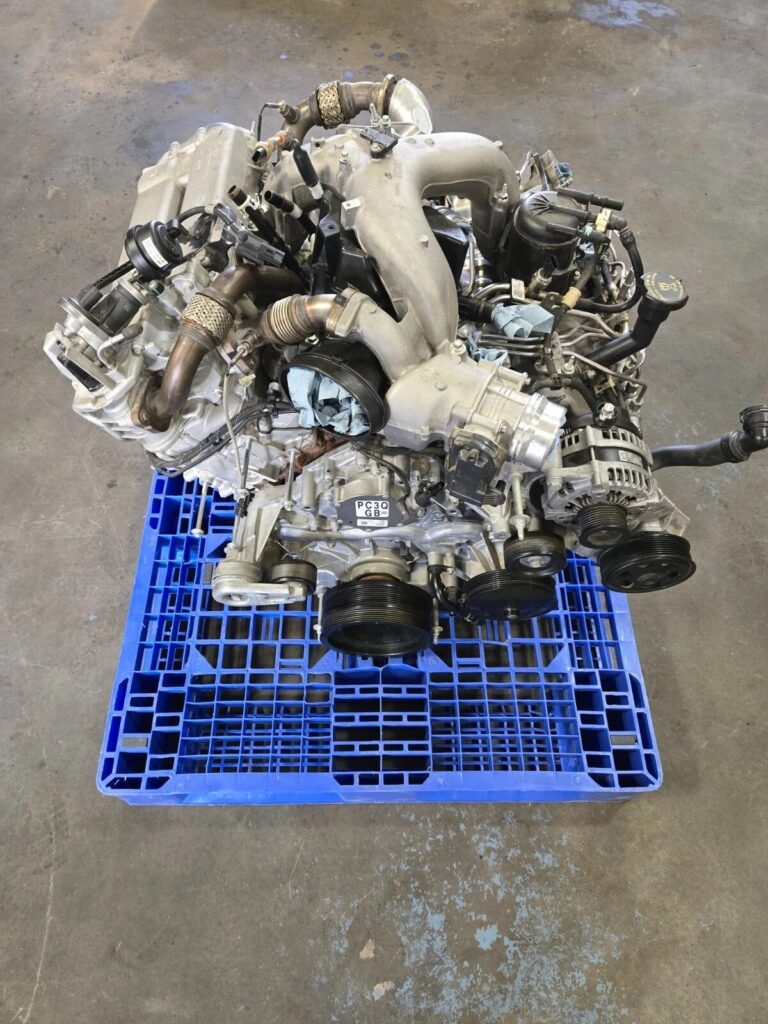
Ford F-250 F350 Super Duty 6.7L Powerstroke Diesel Engine Motor OEM