Porsche 917K
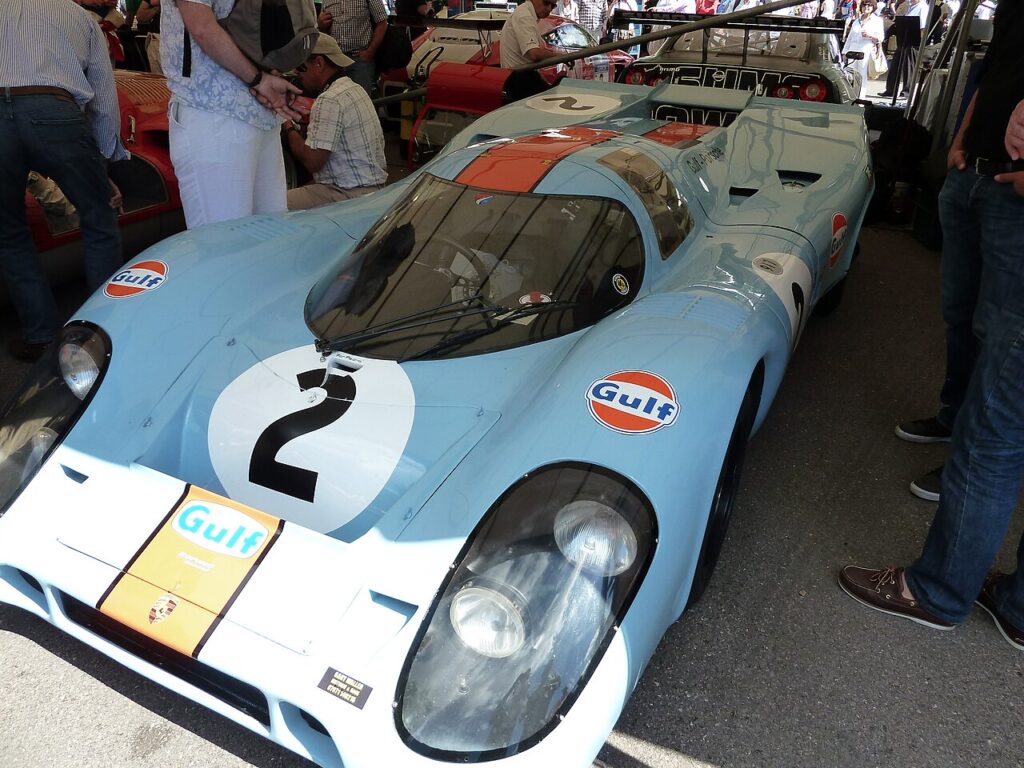
The 917K gave Porsche its first two overall Le Mans victories (1970–71) and, in Gulf livery, became arguably the most iconic sports racing car ever built — a 630 hp flat-12 monster that defined endurance racing's golden age.
History
Porsche built the 917 in 1969 to exploit a rule allowing 5-litre sports cars if 25 existed — a gamble of unprecedented scale for the company, whose engineers famously wheeled out 25 assembled cars for the inspectors. The original longtail was aerodynamically treacherous at speed; the Kurzheck ('short-tail') revision developed with John Wyer's JWA team transformed stability and created the definitive 917K.
The results rewrote Porsche's history: Attwood and Herrmann delivered the first overall Le Mans win in 1970 (Salzburg red-and-white), Marko and van Lennep repeated in 1971 with a distance record — 5,335 km — that stood until 2010. Between them the 917 squads crushed the World Sportscar Championships of both years against Ferrari's 512, while the flat-12 grew from 4.5 to 5.0 litres and around 630 hp.
When the FIA closed the 5-litre class, the platform's second act — the turbocharged 917/10 and 917/30 Can-Am Spyders — reached beyond 1,100 hp and strangled that series too. Steve McQueen's film 'Le Mans' fixed the Gulf-liveried 917K in popular culture permanently; surviving chassis are individually chronicled, and the type anchors any conversation about the most valuable racing Porsches.
Palmarès
Overall Le Mans victories 1970 and 1971 (with the 1971 distance record standing 39 years); World Sportscar Championship titles 1970 and 1971 with wins at Daytona, Sebring, Spa, Monza and the Targa-adjacent rounds; then Can-Am championships 1972–73 for the turbocharged 917/10 and 917/30 evolutions — total dominance across two disciplines.
What to check before you buy
Every 917 chassis has a written, disputed-and-resolved history — engage the recognized marque historians and Porsche's archive before any conversation about money. Value hinges on period race identity (works/Wyer/Martini vs privateer), tub originality (period accident rebuilds are documented; some identities were famously reassigned in period), and engine correctness. Several cars have sold or been valued well north of ten million dollars. Running one requires flat-12 specialists of which perhaps a handful exist worldwide; most owners centralize care with Porsche Classic-linked shops.
Did you know
- To pass homologation Porsche assembled all 25 cars simultaneously — several had never run; inspectors counted, declined a demonstration drive, and signed.
- The 917K's stabilizing tail redesign reportedly began with JWA engineers taping aluminium sheet over the rear deck during a 1969 test — aerodynamics by tin-snips.
- The 917/30 Can-Am evolution produced up to 1,580 hp in qualifying trim — the most powerful circuit-racing car ever raced when it appeared, and for decades after.
In the marketplace now
View all →No exact Porsche 917K listed right now — here is closely related machinery on the market.


Parts, spares & upgrades
Browse parts →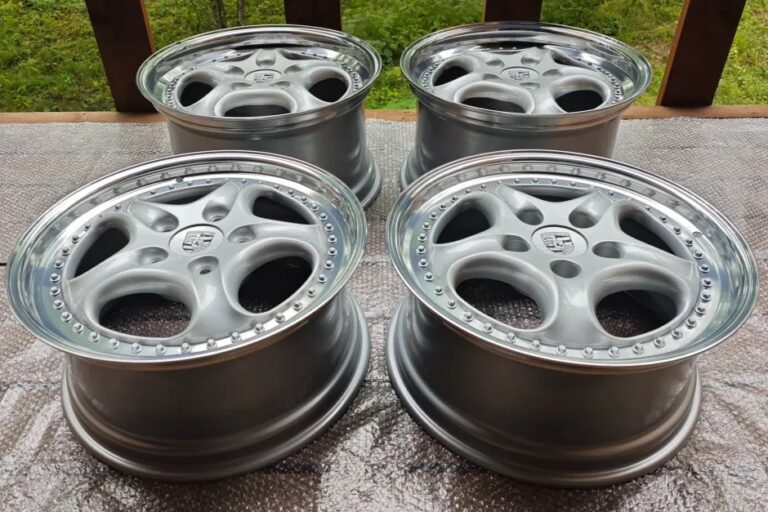
18×8.5″ and 18×10″ Porsche 993 Supercup Magnesium Wheels by Speedline
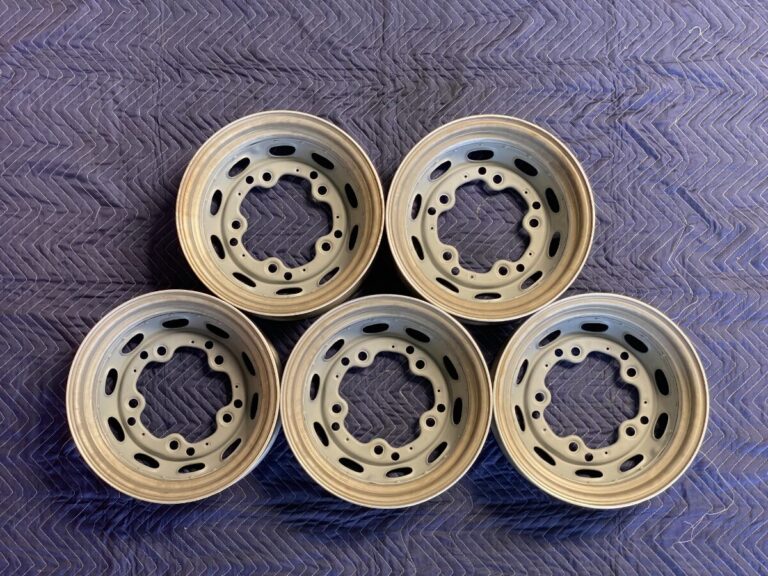
Alloy 15×4.5″ KPZ Wheels and GT-Spec Drum Brakes for Porsche 356
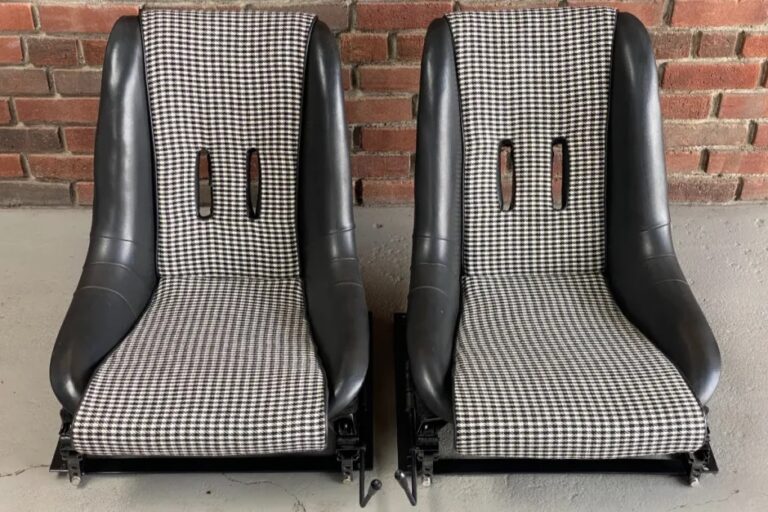
Porsche 911 Bucket Sport Seats