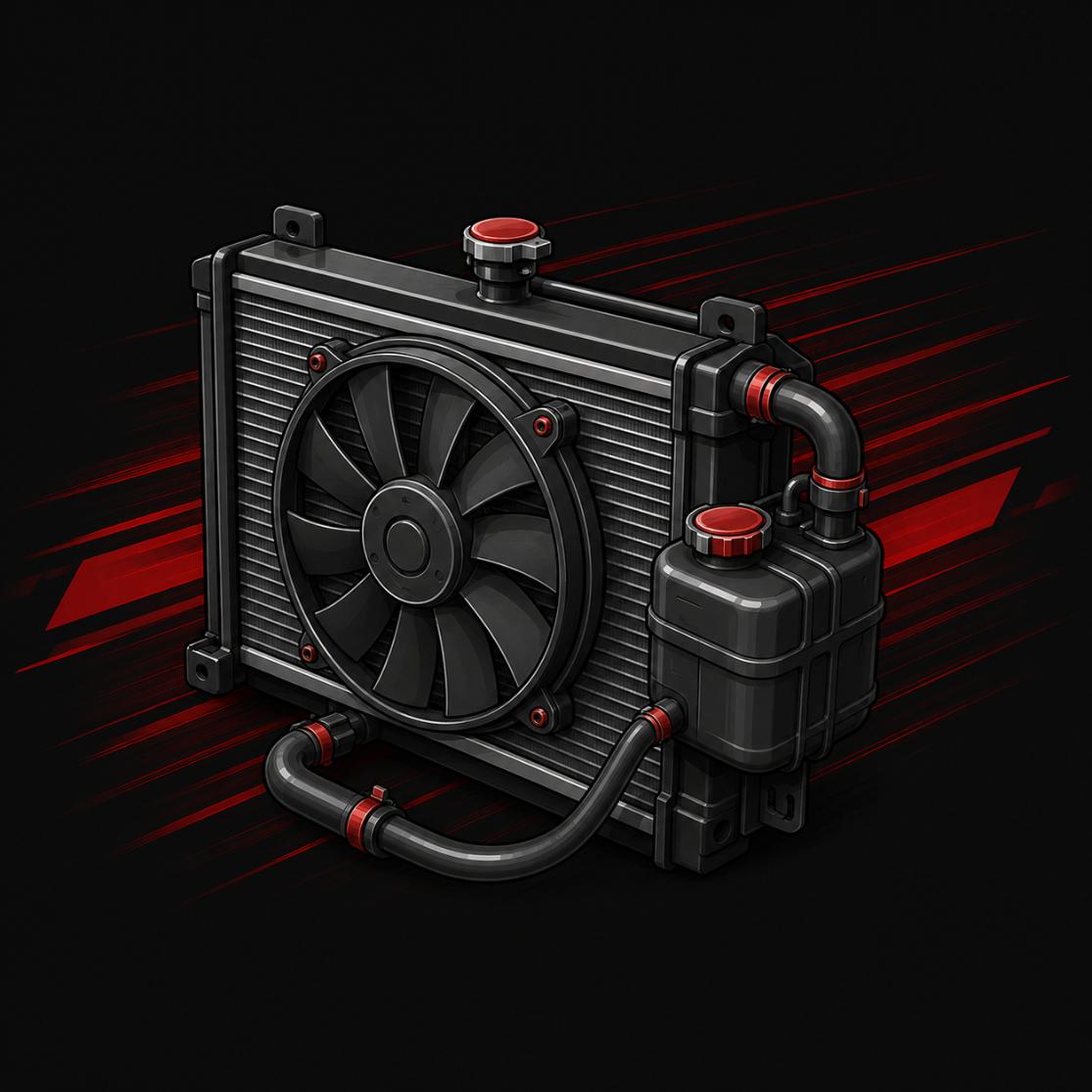
PWR race radiator
PWR is cooling's Formula 1 tier gone customer: the Australian heat-exchanger house whose cores cool Grand Prix grids, NASCAR fields and — through the performance catalogue — every serious build willing to pay for the works stuff.
History
PWR built from Queensland fabrication into world motorsport's cooling establishment: heat exchangers for Formula 1 teams (supply relationships spanning much of the grid), NASCAR's fields, Supercars and professional categories worldwide — the microtube-core and vacuum-brazing technologies developed at that tier flowing into the customer business: per-model performance radiators, intercoolers and oil coolers, plus the custom-fabrication service that builds one-off cores to drawing for race programmes and restorations.
The engineering argument is density: PWR's core technologies reject more heat per volume and per gram than commodity cores — the difference that matters when packaging is tight, rules cap openings, or the last kilogram counts — with the price premium tracking the works pedigree honestly.
Used PWR hardware follows cooler law with a premium twist: contamination history rules cores (an engine-failure radiator murders its next engine — the Mocal lesson at triple the price), physical condition (tube and fin damage, tank and fitting health) audits visually, and per-model identity or custom-drawing provenance decides fit — with the brand's pricing making verified-clean used examples genuinely worth hunting.
Palmarès
Cooling Formula 1 podiums, NASCAR and Supercars championships as supplier across two decades — the heat-exchanger record: temperatures held at the tier where cooling failures end campaigns.
What to check before you buy
Contamination law at premium stakes: a used core's internal history is invisible and decisive — buy only from provably healthy systems (seller's engine story verifiable) or price professional cleaning-and-flow-testing into the deal; ex-failure cores are scrap wearing TIG welds. Audit tubes and fins for impact damage, tanks and fittings for cracks, mounting points for fatigue. Per-model identity (or custom-drawing paperwork) settles fitment. The premium-over-commodity question is honest: pay PWR money where packaging, rules or grams demand the density — a commodity core serves the unconstrained build fine.
Did you know
- PWR's F1 supply spans much of the modern grid — the same Queensland cores rejecting heat at 300 km/h in liveries that never mention them.
- Microtube density is the visible difference: PWR cores read almost solid to the eye — heat-exchange area packed at works-tier tolerances.
- The custom shop builds to drawing for restorations and one-offs — Grand Prix cooling technology available per fax, the Australian way.
In the marketplace now
View all →No exact PWR race radiator listed right now — here is closely related machinery on the market.