
Audi Sport TT Cup car (2015–2017)
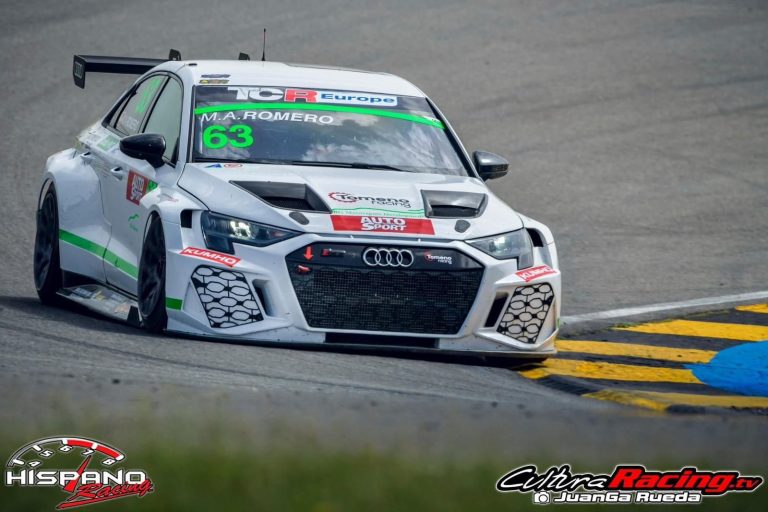
Front-wheel-drive race version of the third-generation (8S) Audi TT, built for a works-run one-make series on the DTM bill from 2015 to 2017. It keeps the road car's 2.0 TFSI and six-speed S tronic, adds push-to-pass and racing ABS, and weighs 1,125 kg. Few genuine cars surface for sale, so provenance matters.
History
Audi announced the TT Cup in October 2014 as a junior series on the DTM support bill, taking over from the Volkswagen Scirocco R-Cup 18. Development had started in June 2014, and the first car ran at Castellolí in Spain that October. A 30-hour endurance test followed before the first race 2. The plan was a 24-car field: 18 places for applicants and six for rotating guest drivers. quattro GmbH prepared and ran every car, so entrants paid for a seat rather than buying a chassis 1.
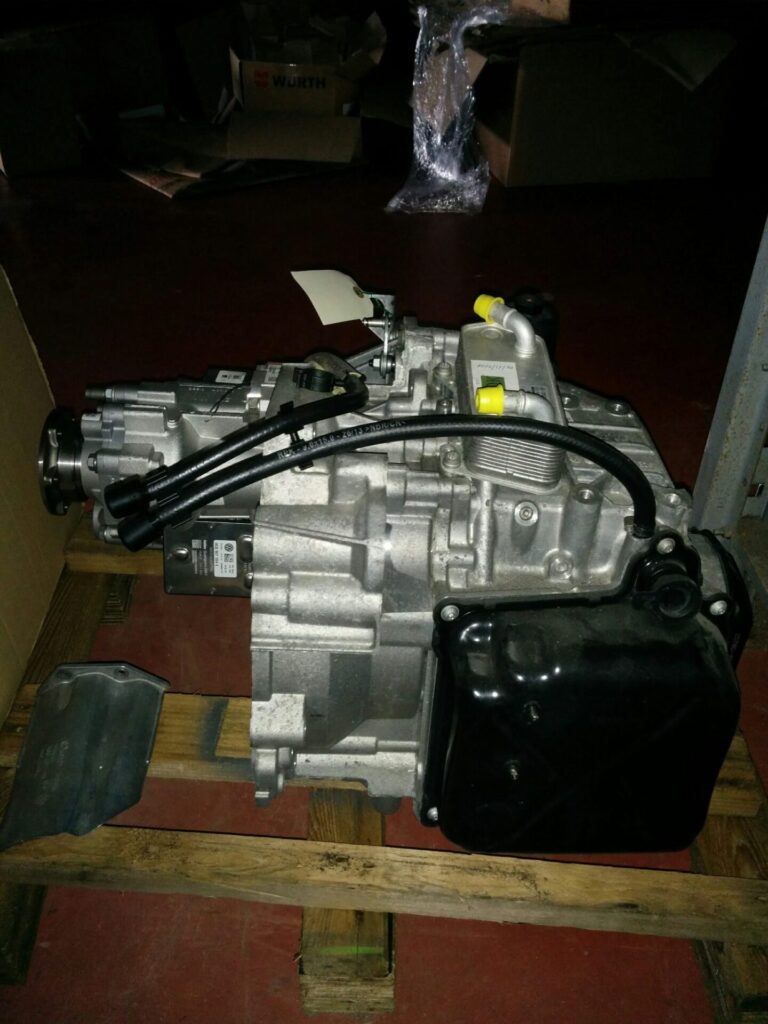
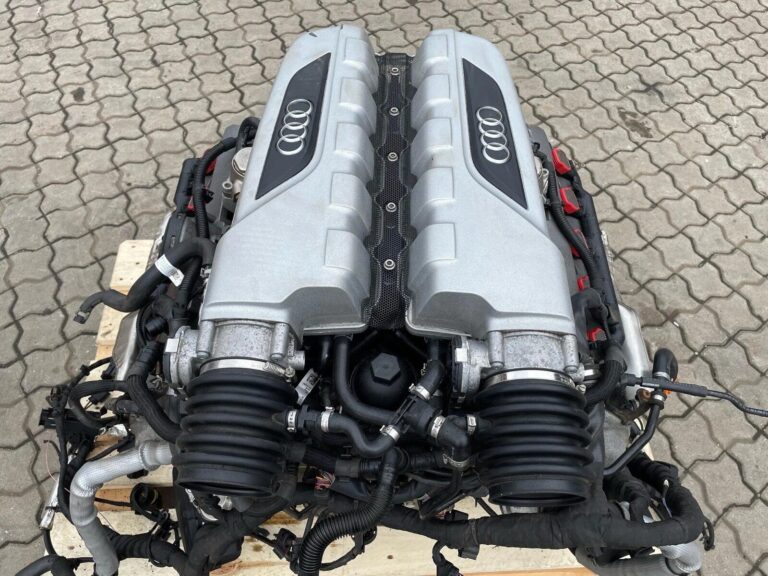
The car used the road TT's 2.0 TFSI engine and S tronic gearbox with few changes. Audi added push-to-pass, an adjustable front differential, racing ABS, a PS1 seat from the R8 LMS ultra and an extinguisher system first developed for its Le Mans prototypes 123. Drivers could only change tyre pressures, anti-roll bars and traction control settings 7. A full season cost around €99,000 plus tax at launch and about €118,800 by 2016 45.
The first season had six double-header meetings, all with the DTM 9. In 2016 the calendar grew to seven meetings and 14 races, with 16 regular drivers from eleven countries 7. The 2017 season again ran 14 races at Hockenheim, the Nürburgring, the Norisring, Zandvoort and the Red Bull Ring, with 17 permanent entries 10. Audi closed the series after three seasons with a Race of Legends at Hockenheim in October 2017 11. A 2018 version under Abt Sportsline was dropped for lack of entries, and an R8 LMS cup took its place 8.
Because the cars were works-owned, they had no customer history during the series. Public records of where each chassis went after 2017 are thin. Buyers should treat any car offered as an ex-works TT Cup as a provenance question first. Note also that the UK's current BRSCC Audi TT Cup uses Mk2 TTs and is a different car 12.
Palmarès
Jan Kisiel of Poland won the first title in 2015 with 231 points, 25 clear of Nicolaj Møller Madsen 9. Joonas Lappalainen of Finland took the 2016 crown, and Philip Ellis of Great Britain won the last title in 2017 with 259 points 810. Guest drivers such as René Rast appeared in 2015 9. The October 2017 Race of Legends put Tom Kristensen, Hans-Joachim Stuck, Emanuele Pirro and other former Audi works drivers in the cars 11.
What to check before you buy
Ask for the chassis number and the seasons and drivers it ran with, plus any paperwork from Audi Sport or quattro GmbH: All cars were centrally prepared, so a genuine car should trace back to the works pool. Confirm it is an 8S-generation car, not a Mk2 BRSCC TT Cup car: The UK club series uses the same name on a cheaper, less powerful Mk2 base. Test push-to-pass, the three differential settings, traction control and ABS on track: These are cup-specific functions that depend on the correct control software. Inspect seat, harness and extinguisher labels and dates: The car used an R8 LMS-type PS1 seat and a prototype-derived extinguisher; expired items must be replaced before racing. List the spares included, especially splitter, wing, arch extensions and wheels: Body and aero parts are bespoke to the cup car, unlike the engine and gearbox, which come from the road TT. Ask the target series organiser in writing whether the car is accepted, and in which class: The car was built for a single closed series; no FIA or national homologation was found in public sources.
Versions and evolutions
| Version | Years | What changed | How to identify |
|---|---|---|---|
| Audi Sport TT Cup (works series car) | 2015-2017 | Single specification run centrally by quattro GmbH; no customer evolution kits are documented in the sources found. 13 | 8S body with wide arches, large splitter, centre-exit exhaust and long rear wing; paddle-shift S tronic, two pedals, push-to-pass button and R8 LMS-type PS1 seat inside. |
Known issues
- Unclear provenance of ex-works cars — Cars were owned and run by quattro GmbH, so there are no customer logbooks from 2015-2017 and individual chassis histories are hard to trace. 1
- Name confusion with UK club cars — Many listings titled 'Audi TT Cup' are BRSCC cars built on the Mk2 TT at around 250 bhp, worth far less than a genuine 8S works car. 12
- Road-derived S tronic gearbox — Testers found downshifts slower than a racing sequential. The box is described as cheap and reliable, but a tired unit shows in shift quality. 3
- Cup-specific electronics and settings — Push-to-pass, the three-mode differential, traction control and ABS were set by the organiser. A car without the correct software may lose these functions. 7
- Contact damage to cup aero parts — Junior grids saw frequent accidents in 2015. Splitter, arch extensions, diffuser and wing are bespoke parts that may be hard to replace now. 7
- Mixed steel and aluminium body structure — Crash repairs to the 8S body need a shop equipped for aluminium work, not just steel welding. 2
Checklist before you buy
- Ask for the chassis number and the seasons and drivers it ran with, plus any paperwork from Audi Sport or quattro GmbH. — All cars were centrally prepared, so a genuine car should trace back to the works pool. 1
- Confirm it is an 8S-generation car, not a Mk2 BRSCC TT Cup car. — The UK club series uses the same name on a cheaper, less powerful Mk2 base. 12
- Test push-to-pass, the three differential settings, traction control and ABS on track. — These are cup-specific functions that depend on the correct control software. 3
- Inspect seat, harness and extinguisher labels and dates. — The car used an R8 LMS-type PS1 seat and a prototype-derived extinguisher; expired items must be replaced before racing. 2
- List the spares included, especially splitter, wing, arch extensions and wheels. — Body and aero parts are bespoke to the cup car, unlike the engine and gearbox, which come from the road TT. 13
- Ask the target series organiser in writing whether the car is accepted, and in which class. — The car was built for a single closed series; no FIA or national homologation was found in public sources. 8
Running costs 1
| Rebuild interval | unknown; not published |
|---|---|
| Typical rebuild cost | unknown |
| Consumables | Hankook slicks (series tyre), brake pads and discs, S tronic fluid and filter |
| Spares availability | Engine and gearbox are near-standard road TT units, so service parts come from the production range; cup-specific body and electronics support after 2017 is not documented. |
Where it races today
Market prices
- Full season seat in the TT Cup at launch, car and preparation included: 99,000 plus tax EUR (2014-10) 4
- Full season seat, as quoted at a 2015 track test: about 100,000 EUR (2015-07) 3
- Full season seat in 2016: about 118,800 EUR (2016-10) 5
- Not this car: complete Mk2 BRSCC Audi TT Cup build, for comparison: under 12,000 GBP (2022-10) 12
As of 2026-11 we found no public sale price for a genuine ex-works 8S TT Cup car, and none was listed on racingcarnetwork.com. Price any offer on provenance and spares rather than on season-fee history.
Reference prices are dated and sourced; live asking prices are in the listings above.
Frequently asked questions
Could you buy a TT Cup car new in 2015?
Not in the usual way. Audi's quattro GmbH prepared and ran all the cars centrally. Drivers paid a season fee, around €99,000 plus tax at launch, that covered the car and its preparation. That is why ex-series cars come from a works pool rather than from private owners.
Is a UK 'Audi TT Cup' car the same thing?
No. The BRSCC Audi TT Cup that started in 2023 uses the Mk2 TT with a 2.0 TFSI at around 250 bhp, built for under £12,000. The Audi Sport car is an 8S with 310 PS, push-to-pass and racing ABS. Check the body generation before comparing prices.
How does it drive compared with a pure racing car?
It has 310 PS plus 30 PS of push-to-pass and weighs 1,125 kg, but it keeps a road-car dual-clutch gearbox. Testers praised the racing ABS brakes and found the downshifts slower than a racing sequential. Drivers can only adjust tyre pressures, anti-roll bars and traction control.
Where can I race one now?
The original series ended in 2017 and its 2018 replacement was cancelled. We found no series with a published class for the car. Club and endurance organisers may accept it on request, so get written confirmation of class and ballast before you buy.
Are parts still available?
The engine and S tronic gearbox are close to the road TT, so service parts are a production item. Bespoke cup parts such as aero, ABS calibration and control software are the risk. Buy a car with spares included and ask how electronics support is handled.
Sources
- Audi to launch racing series for the new TT, Racecar.com (Audi press release) (2014-10) — Power, push-to-pass, gearbox, weight, 24-car field, quattro GmbH central preparation, PS1 seat
- 2015 Audi Sport TT Cup, Supercars.net (2015) — Engine detail, torque, differential, body structure, roll cage, extinguisher, development timeline, 30-hour test
- Audi TT Cup (track test), Automoto.it (2015-07) — Racing ABS, fuel tank, differential modes, gearbox impressions, season cost
- Audi TT Sport Cup: trofeo monomarca, alVolante (2014-10) — Season cost at launch
- What's it like to race in the Audi TT Cup?, evo (2016-10) — Torque, weight saving over road car, 2016 season cost
- Discovering the Audi Sport TT Cup, Guide Auto Web (2016-03) — Power with push-to-pass, S tronic paddles, cockpit equipment
- Hankook and Audi making young drivers faster, Hankook Tire (2016-10) — Tyre, permitted adjustments, 2016 field size and races, accident trend
- Audi Sport TT Cup, Wikipedia (2025) — Series years, champions, Scirocco R-Cup replacement, cancelled 2018 season
- 2015 Audi Sport TT Cup, Wikipedia (2025) — 2015 calendar, champion points and margin, guest drivers
- 2017 Audi Sport TT Cup, Wikipedia (2025) — 2017 calendar, venues, permanent entries, champion points
- Audi organise the 'Race of Legends' to bid farewell to the TT Cup, TouringCarTimes (2017-10) — End of series, Race of Legends drivers
- BRSCC launches SW Motorsports Audi TT Cup Racing series for 2023, BRSCC (2022-10) — UK Mk2-based TT Cup, power and build cost, to separate it from the Audi Sport car
- Audi Sport TT Cup Racing Series Launched for 2015, GTspirit (2014-10) — Bodywork and aero parts, identification
- Audi Sport customer racing celebrate tenth anniversary, The Checkered Flag (2018-05) — Confirms the TT cup car was used for three seasons only
Did you know
- The race car is about 240 kg lighter than the road-going TT it is based on 5.
- Its seat came from the R8 LMS ultra GT3 car and its extinguisher system from Audi's Le Mans prototypes 2.
- The last race in October 2017 was a Race of Legends with former Audi works drivers such as Tom Kristensen and Rinaldo Capello 11.
In the marketplace now
View all →No exact Audi Sport TT Cup car (2015–2017) listed right now — here is closely related machinery on the market.